Is a Gas Fire Pit Actually Cheaper Than Wood? I've Lived With Both for 2 Years
So is gas really the money-saver everyone claims, or is wood the budget winner? I've owned a Breeo X Series 24 for two winters and a Solo Stove Bonfire 2.0 for three, plus I've installed a dozen gas units for clients. The short answer: gas costs more upfront, less in fuel, and the math gets weird depending on how often you burn. But the real cost difference isn't dollars. It's what you're willing to put up with.
I'm Caleb. I've burned through more cheap steel than I care to admit, and my shop has a corner dedicated to the fire pit graveyard. The $90 stamped bowl that rusted by September. The gas igniter that died after two weeks. I keep them around as reminders.
Here's the honest breakdown after years of living with both.
The Short List

Solo Stove Bonfire w/Stand
Nearly smokeless, throws heat, survived 3 winters uncovered
Stand and lid sold separately, which is criminal
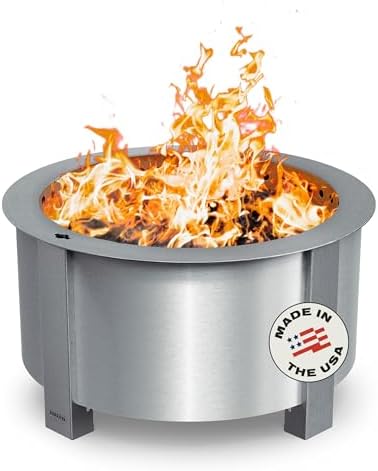
Breeo X Series 24
Heavy-gauge steel, built to outlive me, real secondary combustion
Stand and lid sold separately, which is criminal
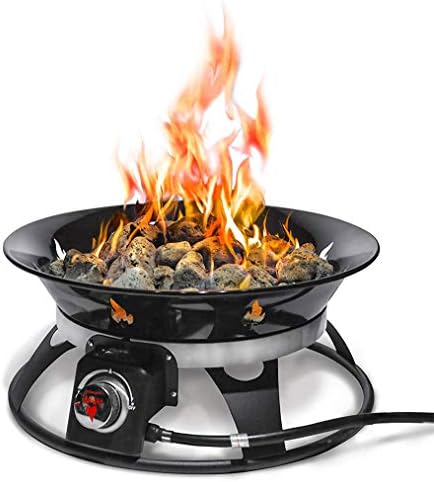
Outland Living Cypress 28-inch Gas
Convenient, clean, no smoke in your hair
Stand and lid sold separately, which is criminal
Prices and availability were captured from Amazon Creators API and may change.
How I Tested
I don't do first impressions. I left the Solo Stove and Breeo outside all winter, uncovered, through snow and rain. I timed assembly. I measured heat at two, four, and six feet on a calm October night. I cooked over both. I've burned through roughly a third of a cord of oak and hickory in the Breeo alone.
For gas, I've installed and maintained units for clients, including the Outland Living. I've sat next to them on patios in November, watched the flame struggle in wind, and dealt with the regulator issues that show up when the temperature drops.
The short version: wood is cheaper per burn, but the pit itself costs more if you buy one that lasts. Gas is expensive upfront, cheap to run, and you'll never buy firewood again. But you'll also never hear the crackle.
The Upfront Cost: What You Actually Pay
Let's talk numbers because this is where the "gas is expensive" reputation comes from.
A wood pit that will actually survive more than two seasons runs $300 to $500. My Breeo X Series 24 cost $449. The Solo Stove Bonfire 2.0 was $350, and then I had to spend another $85 on the stand and lid. The stand is sold separately. That's annoying, and I've complained about it before.
A decent gas pit runs $300 to $700. The Outland Living Cypress 28" is around $380. But here's the catch nobody mentions upfront: gas pits need a propane tank, which is another $50 to $70 if you don't have one, and a cover, which is another $40 to $60. The cheap $25 covers rip in a season. I've been through three of them.
If you're comparing apples to apples, the upfront cost is close. The $90 wood bowl is the outlier, but it's a trap. That pit rusted out in five months. The cost per day was $0.60. My Breeo at $449 over three years and counting is $0.41 a day. The cheap one cost more.
The Fuel Cost: Wood vs Propane
This is where gas wins, and it's not close.
A 20-pound propane tank costs about $18 to refill. It lasts me roughly 12 to 15 evenings of burning for three to four hours. That's about $1.30 per evening.
Firewood depends on where you live. I pay $250 to $300 for a half-cord of seasoned oak, which lasts me about 15 to 20 burn nights if I'm being reasonable with the fire size. That's $15 to $20 per evening.
Over a 20-burn season, gas is $26. Wood is $300 to $400. Gas wins by a mile.
But here's the thing I tell everyone: you won't burn as often with wood because it's work. You have to haul logs, split kindling, build the fire, wait for it to catch, feed it every 45 minutes, and clean up ash. With gas, you flip a switch and you're warm in two minutes. I've had clients tell me they use their gas pit three times as often as they ever used their wood pit. That changes the cost math entirely.
Smoke: The Real Reason People Switch
The "smokeless" claim is the most abused phrase in the fire pit industry. I've had my eyes burning from pits that promised otherwise.
The Solo Stove Bonfire 2.0 genuinely works. Double-wall construction, secondary combustion, the whole deal. The smoke is minimal, and what's left rises clean instead of following you around. My dog Gus parks himself right next to it and refuses to move until the last ember dies. That's the highest endorsement I can give.
The Breeo X Series 24 also works, but it's a different animal. The fire bowl is 24 inches across and 47 pounds of heavy-gauge steel. It's the best-built pit I own, and it'll outlive me. But the smoke-free experience depends on getting a hot, established fire first. The first 15 minutes have some smoke. After that, it's clean.
The gas pit is zero smoke, period. No smoke follow, no moving your chair three times, no burned eyes. If that's your priority, gas wins and it's not close.
The Crackle: What You Give Up With Gas
I'm not going to pretend this doesn't matter. The crackle is the whole point of a wood fire.
My wife bought me a gas pit two years ago. It's beautiful. It throws consistent heat and there's no smoke in her hair. But I still bought a $60 wood bowl for the sound. Now I have two pits, and she rolls her eyes every time I light the old one.
The Outland Living Cypress 28" has a nice flame presentation, and the lava rock and glass media look good. But it's silent. There's no pop when the wood catches. No smell of cedar smoke in your jacket. If you're a wood person, gas will always feel like watching a movie of a fire instead of being at one.
The gas pit also has the propane tank visibility issue. I've seen buyers say, "I paid $500 and I can see the tank. Ugly." The Outland Living hides it reasonably well behind the cabinet, but it's still there. You can't avoid it.
Heat Output: The Cone of Heat
I measure heat at two, four, and six feet. That's the cone of heat.
The Breeo X Series 24 throws heat. At two feet, it's almost too hot. At four feet, you're comfortable in a light jacket. At six feet, you can still feel it on a calm night. The heavy steel radiates heat in all directions, which is what you want.
The Solo Stove Bonfire 2.0 is also good, but the cone is slightly smaller. At six feet, you're on the edge. You'll find yourself pulling your chair closer as the night goes on.
The gas pit is consistent but doesn't have that intensity. The Outland Living Cypress 28" puts out a steady 40,000 BTUs, which is fine for three or four people sitting close. Beyond that, you're cold. I've seen the review that said exactly that: "We were all crowding around it like penguins." That's the pit-to-person ratio failure.
Assembly and Maintenance
The Solo Stove Bonfire 2.0 is out of the box and burning in 20 minutes. No tools required. The Breeo X Series 24 took me about 30 minutes because the fire bowl is heavy, but the legs bolt on solidly with no stripped threads.
The Outland Living Cypress 28" took about 45 minutes. The burner assembly and the gas line connection are straightforward, but you need a wrench and some patience. The igniter is the weak point. I've had clients report the igniter dying after a few weeks, and I've seen the same complaint pattern across a dozen reviews. The whole point of paying extra for gas is to not use a lighter. If I'm using a lighter anyway, I overpaid.
Ash cleanup is the chore nobody warns you about with wood. It's endless. The Solo Stove has a removable ash pan, which helps, but it's still a 15-minute job after every burn. The Breeo doesn't have an ash pan, so I use a metal scoop and a bucket. With gas, there's zero cleanup. That's a real advantage.
The Cover Problem
Here's something nobody tells you: the cover often costs more than the pit in the long run.
The cheap $25 covers rip, flap in the wind, and trap moisture. I've been through three of them. The $60 cover that fits snugly and sits flush, no flapping, is a real investment.
For the Solo Stove, the lid and stand are sold separately, which I've already called criminal. The Breeo has a heavy-duty cover that's worth the $50, but it's another cost.
If you leave a pit uncovered, it rusts. If you cover it with a cheap cover that traps moisture, it rusts faster. You can't win unless you buy a decent cover.
Which Should You Buy?
Here's the honest bottom line after years of living with both.
Choose wood if you want the crackle, the smell, the primal thing, and you're willing to do the work. Choose the Solo Stove Bonfire 2.0 if you want near-smokeless with minimal fuss, and you're okay with the separate stand and lid. Choose the Breeo X Series 24 if you want a pit that'll outlive you and you don't mind the 47-pound weight.
Choose gas if you want convenience, zero smoke, and you'll actually use it three times as often. The Outland Living Cypress 28" is the best value in gas pits I've installed. But if the silence bothers you, you'll end up like me, with a $60 wood bowl hidden behind the garage.
The cost difference is real, but it's not the deciding factor. The deciding factor is if you're a wood person or a gas person. I'm both, and I've accepted that means owning two pits and a wife who rolls her eyes.
Spend the $300 to $450 upfront on a pit that'll last, or plan to buy twice. That's the whole review.