Related: How to Build a Fire Pit Ring That Survives Winter
I have built more fire pits than I have sat around. Fifteen years of landscape work around Asheville, most of it in other people's backyards, and I have set pits into paver patios, gravel pads, and one wooden deck I still feel bad about. The clients get the fires. I get the next job.
That is exactly why I am picky about this. In a product photo, a smokeless fire pit and a cheap steel bowl look like the same object. Sit downwind of both for an hour and they are not the same evening at all. Smoke management is the feature. Size, finish, and shape are decoration until the smoke stops following you around the fire.
Four things are on this page: the smokeless pit I would buy for family nights, the budget wood pit that does the classic job, and two pieces of gear that make the whole setup work, one of which is not fire gear at all. I will tell you which one. No prices, because they move, and no invented specs, because I have read enough of those already.
Best Smokeless Pick: Solo Stove Bonfire with Stand
This is the pit I would hand to someone with kids who wants to sit outside and not smell like a chimney at bedtime. The Bonfire is built around a double wall. Air gets pulled up between the two walls, hits the rim, and gets pushed back down into the fire, which is how secondary burn eats the smoke instead of sending it across the yard and into your face. That is the whole trick of smokeless design, and the Bonfire does it at 19.5 inches, small enough to move and big enough for a real fire.
It ships with a stand, and the stand matters more than people expect. Radiant heat comes off the base as well as the sides, and keeping that base off the surface underneath it is the difference between a fire pit and a scorch mark. On gravel, who cares. On pavers or a sealed patio, you care a lot.
The tradeoff is heat output. A pit like this is a radiant heater, not a bonfire you warm your hands over from six feet away. It is a joke for warmth next to a wide open bowl. What you are buying is the smoke free evening, the ability to sit close to the flames, and a burn that is mostly done by the time you go inside. For family nights, that is the right trade. For a cold November night with a bottle of bourbon, I want something wider.
That is the honest version. It is the best smokeless pick I know of, and it is the one I would buy again.
Best Budget Classic: Yaheetech 30 Inch Wood Burning Fire Pit
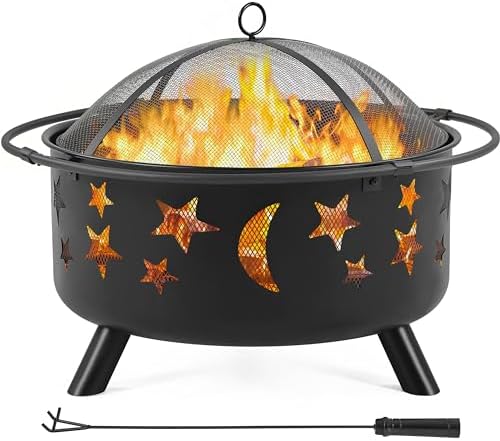
The Yaheetech is the other end of the spectrum: an open wood burning bowl, 30 inches across, no double wall and no secondary burn. It smokes. That is what an open wood pit does, and anyone who tells you otherwise is selling something.
Here is why it is still on this list. Thirty inches is the size I recommend for a backyard pit, and it is the size most people skip. Twenty four inches sounds close enough and it is not. You want room for full length logs, room for a spark screen to sit over the top, and enough bowl that a fire does not feel crowded. This gives you that footprint without asking much for it.
The tradeoff is steel. It is thin, and thin steel rusts. Not maybe. If it sits out through a mountain winter with no cover, you will see it by spring. Cover it, or move it under a porch, and you will get years out of it. Budget steel is a maintenance decision, not a mystery.
So yes, it is the budget pick, and I mean that as a compliment. It is a real fire pit rather than a planter with a bowl in it, and the difference is whether the thing was designed to hold fire or designed to hold dirt.
The Walk Out To The Pit: Anothera Walk Path Maker Molds
I am a landscape guy, so I notice the walk before I notice the fire. A lot of the pits I have built get used less than they should because the trip out there is a dark, muddy, ankle turning walk across the lawn. Nobody says that out loud. They just start having fires less often, and the pit becomes furniture.
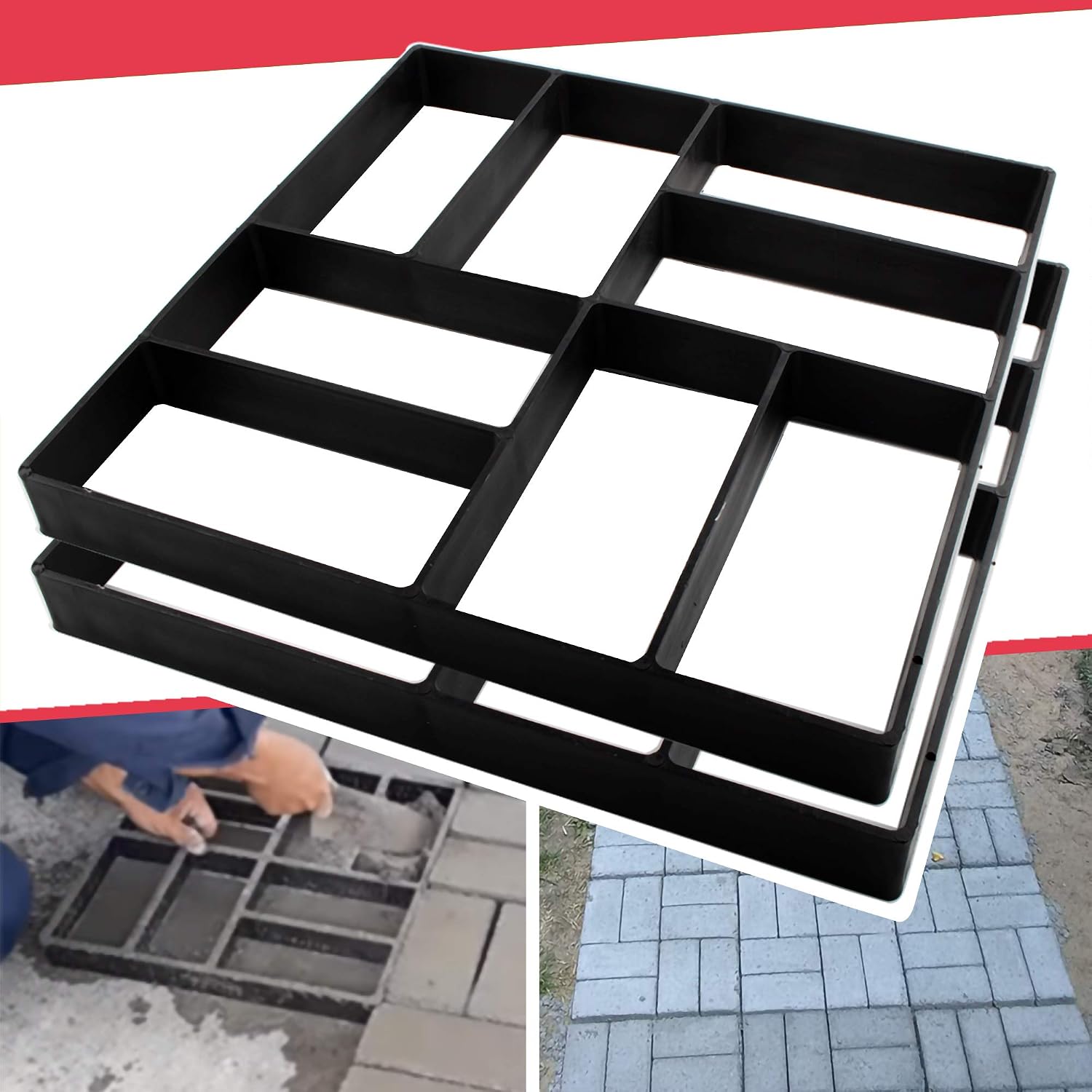
These molds are two 15.7 inch squares with an eight grid pattern. You set one where you want a paver, fill it with concrete, let it cure, lift it, and repeat. The repetition is the whole point. A concrete path poured freehand looks freehand. A molded one looks like a path, because every stone is the same shape and the spacing stays honest.
Two things to know before you buy. The mold is 1.57 inches deep, so what you are pouring is a paver rather than a slab. That is what you want, because a paver moves with frost and a slab cracks. And cure time is not optional. Concrete walked on too early is concrete you will redo, which is the most expensive kind there is.
This is the least exciting item on the page and probably the one that changes how often you actually use your fire pit.
The One That Isn't Fire Gear: Gorilla Grip LeakGuard Mat
Honest disclosure: this is an under sink mat for a kitchen cabinet, 24 by 24, black. It is not a fire pit accessory. It is here because the rule I use on every outdoor purchase applies indoors too. If it cannot handle water, it was not a purchase, it was a decoration.
The LeakGuard is designed to sit under a cabinet sink and catch the drips, the slow seeps, and the occasional real leak before they reach the cabinet floor. The edge is the point. A flat mat spreads water around and hides it. A mat with a lip holds it in one place where you can see it and deal with it.
Where that fits a fire pit setup: underneath the mess. Ash buckets, firewood bins, and wet tarps are the three things that wreck a deck board or a garage floor over a season, and a lipped mat under the bin catches the debris and the damp instead of letting it soak in. It is a cheap way to contain a problem rather than discover it in spring.
If that sounds like a stretch for an outdoor article, fine, it is. But you will notice the pattern by now. Contain the water, contain the ash, cover the steel, and everything lasts longer.
Four Questions Before You Spend Anything
Fire is simple. Steel and airflow are the only hard parts. This is the checklist I run on any pit, whether I am buying it or building it.
What is the steel gauge? Thickness decides the lifespan. Thin metal is a season, thicker metal is a decade, and the difference shows up the first time the bottom warps or the finish flakes off in sheets. If a listing will not tell you how thick the steel is, that silence is your answer.
Does the smoke follow you? Every pit burns. The real test is what happens when you sit down. If you have to move your chair twice in an hour, you bought a fireplace with a seating problem. Double wall designs fix that. Open bowls do not, and no amount of clever marketing changes the physics.
Is there a real spark screen, or a place to put one? I have seen what an ember does to a deck. A screen is not a nice extra, it is the difference between a fire night and a repair bill, and a pit that cannot take one is a pit I only recommend over gravel.
Would it still be standing after a season of weather? Rain, freeze, thaw, repeat, all winter long. Anything that cannot survive that with a cover on it was a decoration when you bought it, and it will be a decoration when you replace it.
The Fire Pit Comparison Table
This is the short version. Four items, what each one is for, and the honest tradeoff on each. Prices move constantly, so check them at the link instead of trusting a number printed anywhere, including here.
| Product | Best for | How it burns | The tradeoff | Price |
|---|---|---|---|---|
 Visit on Amazon → Visit on Amazon →Solo Stove Bonfire with Stand |
Family nights and close seating | Double wall secondary burn, very little smoke | Radiant heat only, not a hand warmer | Visit on Amazon → |
 Visit on Amazon → Visit on Amazon →Yaheetech 30 inch wood burning fire pit |
A classic fire on a budget | Open bowl, full length logs, real smoke | Thin steel will rust if left uncovered | $109.99 |
 Visit on Amazon → Visit on Amazon →Anothera walk path maker molds, 2 pack |
The path from the deck to the pit | Not a fire product, molded concrete pavers | Slow work with cure time between pours | $44.98 |
 Visit on Amazon → Visit on Amazon →Gorilla Grip LeakGuard under sink mat |
Containing ash, damp, and drips | Not a fire product, lipped water containment | An indoor mat doing outdoor duty | Visit on Amazon → |
Should you buy the Solo Stove Bonfire?
Yes, if smoke is the reason you stopped sitting outside. The double wall design does what it claims, the burn is clean, and the included stand keeps the base off your patio. You sit close, you talk, you go inside without smelling like a campfire. That is the pitch, and it holds up.
What you are not buying is heat. It is a radiant pit, so the warmth is at your shins when you are near it and gone when you are not. If your idea of a fire night is standing around a bonfire in a jacket, this is not that pit. If it is four chairs, a couple of kids, and a dog that keeps trying to investigate, this is exactly that pit.
Should you buy the Yaheetech 30 inch fire pit?
Yes, if you want the real thing and you are realistic about steel. Thirty inches is the right size, the footprint takes full length logs, and it gives you a bowl you can build a fire in without crowding it. It is a genuine fire pit.
The catch is maintenance. Thin steel plus weather equals rust, so cover it, store it, or accept that you will replace it sooner than you would like. That is the deal. What you get in return is a wood fire, with smoke and crackle and all, at a price that does not require a family meeting.
The bottom line
Decide which person you are first. If you want an evening without smoke in your hair, the smokeless pit is the answer and the tradeoff is heat. If you want the real thing, the open bowl is the answer and the tradeoff is rust and smoke. Neither one is wrong. Buying the wrong one is how a fire pit ends up as a planter on the side of the house.
Then handle the boring parts. Lay the path so people actually walk out there after dark. Cover the steel. Keep the ash and the damp contained instead of letting them soak into the deck. The fire is the easy part. Everything around it decides whether you are still using this thing in five years.