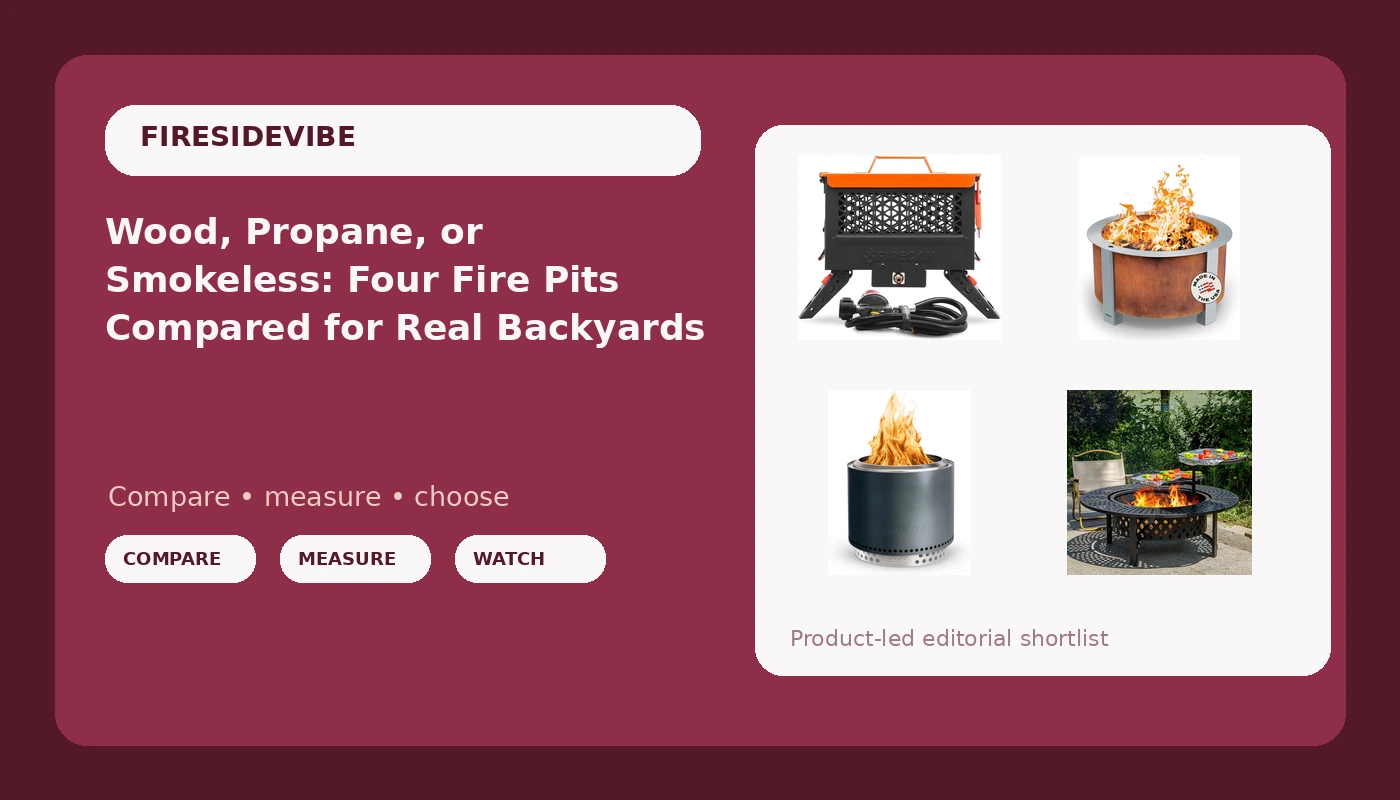
Fire pits are simple machines: a bowl, a fuel, and airflow. That is exactly why they are so easy to get wrong. I have built and installed them around Asheville for fifteen years, from thin steel bowls that cracked by their second spring to heavy corten monsters that will outlive the deck they sit on, and the differences almost never show up in the product photos. This backyard fire pit comparison covers four pits that land in the same shopping carts for very different reasons: two smokeless wood burners, one portable propane unit, and one wide grill-ready pit that is a different animal entirely.
The short answer: if you burn real wood and you want a permanent centerpiece, the Breeo X Series 24 is the one I would put in my own yard. If your patio is small or you want to move the fire, the Solo Stove Bonfire with Stand is the better fit. If smoke in your hair is the dealbreaker and wood is negotiable, the Ignik FireCan is the convenience play. And if you want to cook over the flames more than you want to stare at them, the OutVue 47 Inch is the outlier worth a look.
The long answer is about steel, airflow, and whether the smoke follows you around the fire.
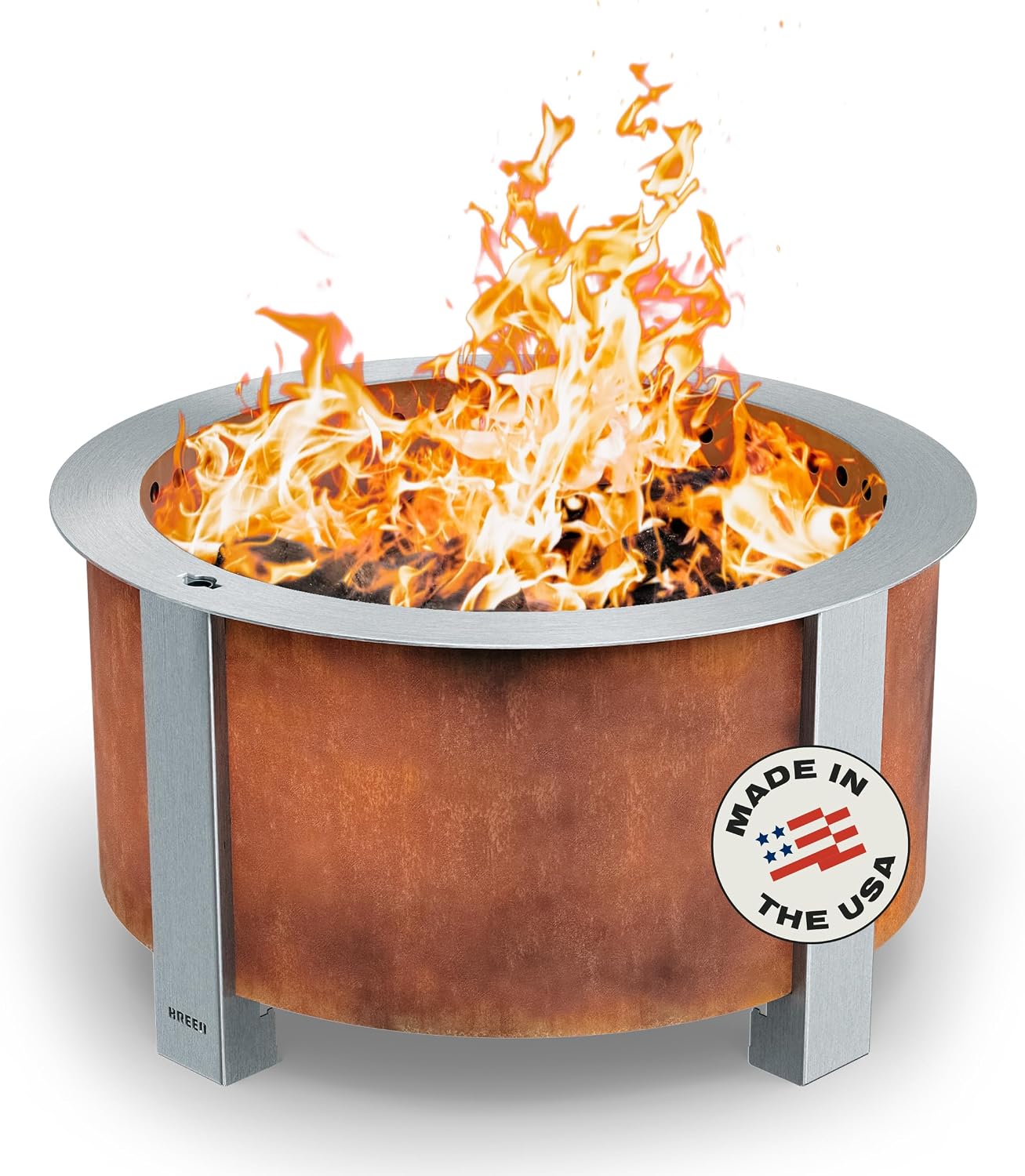
Breeo X Series 24 - Corten Steel Smokeless Fire Pit for Outside - 27.5 in
Heaviest build of the group, corten steel that weathers instead of flaking, secondary burn that genuinely cuts smoke
Premium spend, and the 27.5 inch footprint wants a real patio, not a balcony
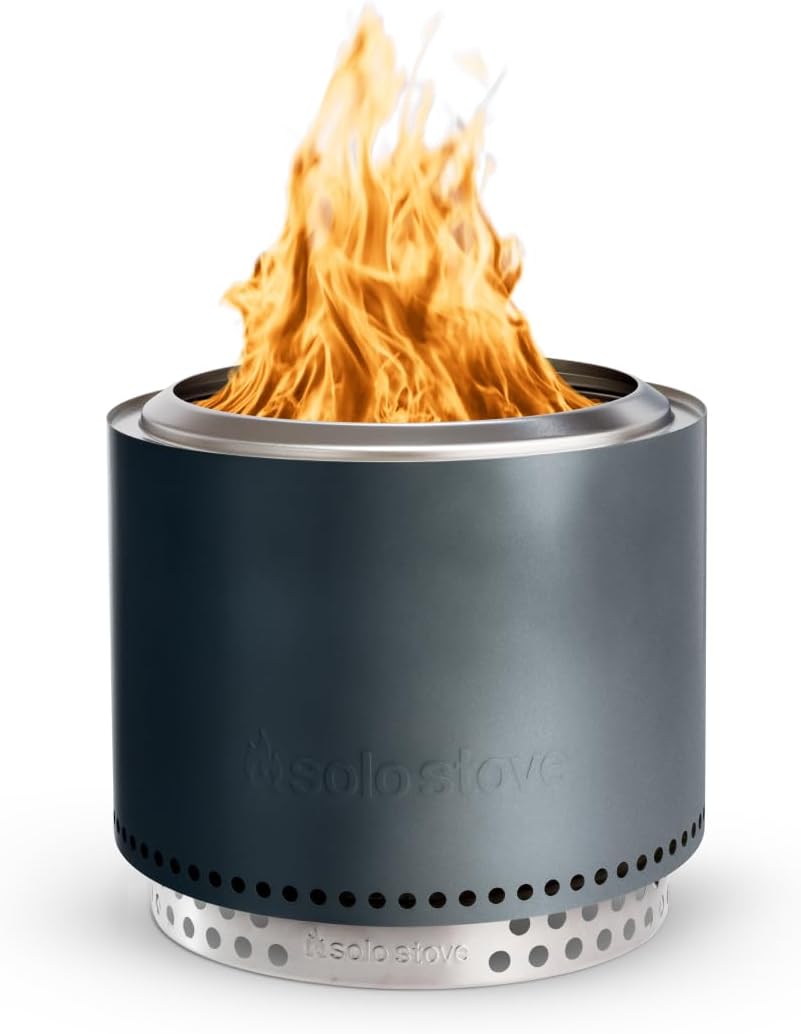
Solo Stove Bonfire w/Stand | 19.5" Smokeless Wood Fire Pit, Gunmetal
Best smoke performance per inch, the stand protects the surface underneath, easy to move and store
Radiant heat is modest, and it is a wood-only burner with no cooking accessories in the box
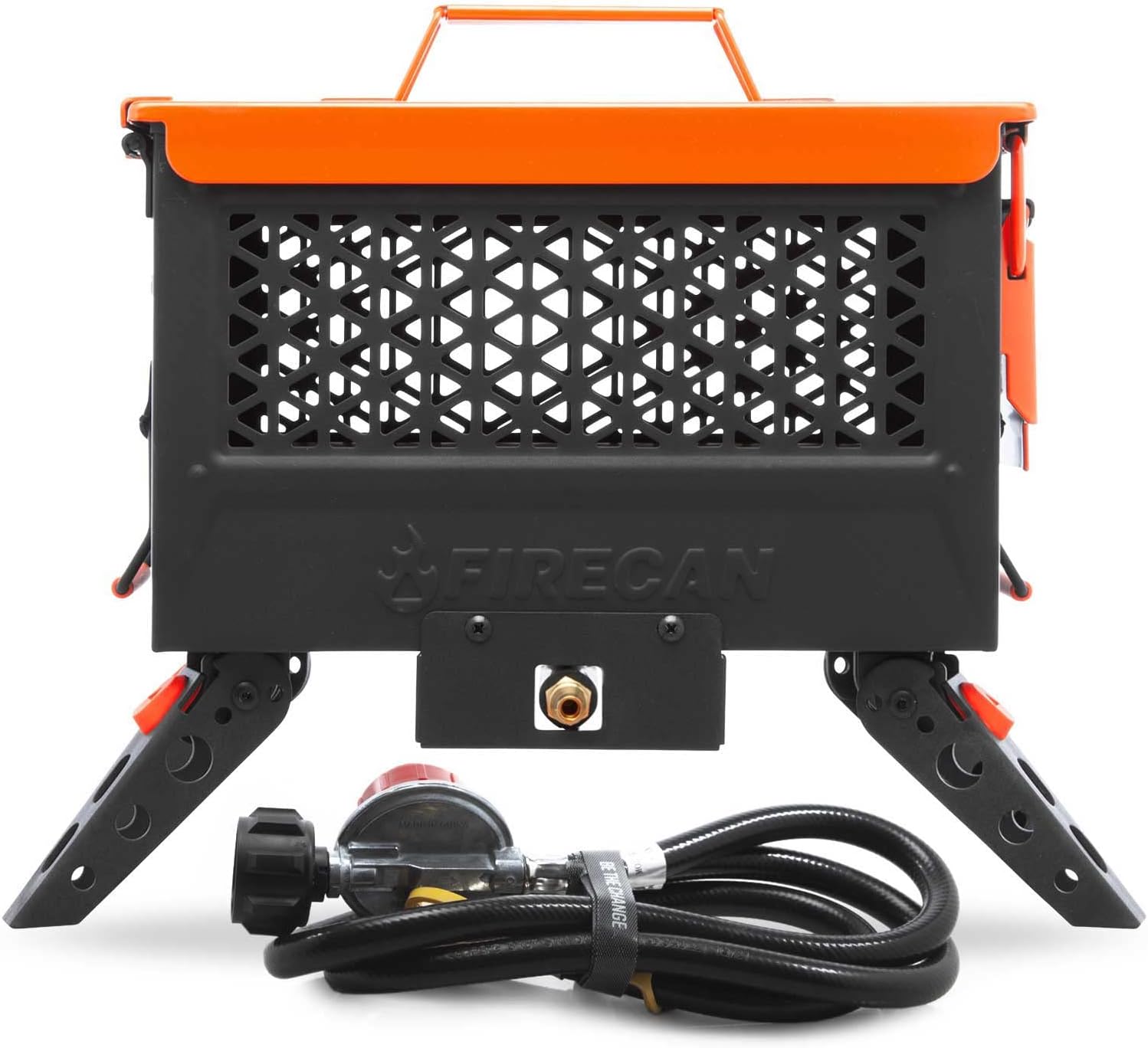
Ignik FireCan Portable Propane Fire Pit with Hose and Regulator
No smoke, no ash, no waiting on coals, hose and regulator included so it runs off a standard tank
Propane convenience is not a campfire, flame is small, and you are done the moment the tank is empty
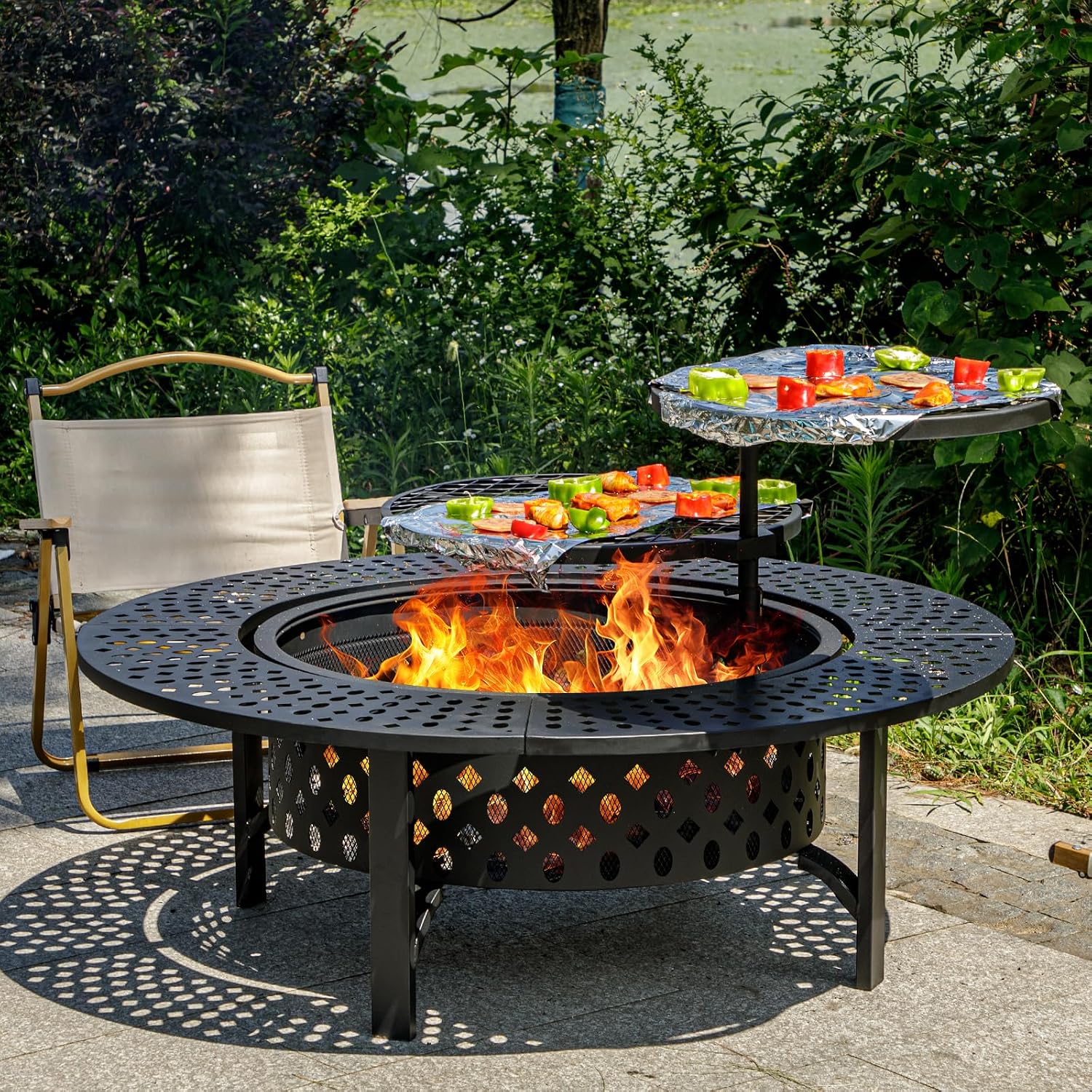
OutVue 47 Inch Fire Pit with 2 Grills
Widest cooking surface of the four, two grills included, doubles as a real wood fire pit
Smoke management is basic, so you sit upwind or you sit in it
Prices and availability were captured from Amazon Creators API and may change.
What I check before I recommend anything
Four things decide whether a fire pit is a purchase or a decoration: steel gauge, smoke behavior, spark containment, and how it handles a season of rain. Steel gauge is the one nobody advertises, and it is the one that decides whether you are buying a decade or a season. Smoke behavior is the one you cannot see in a photo, because a double-wall design and a single-wall bowl look nearly identical until you are sitting downwind with your eyes watering. Spark containment is the safety piece I refuse to compromise on, and weather survival is where cheap pits quietly fail.
Everything below is filtered through those four tests.
The smokeless wood pair: Breeo X Series 24 and Solo Stove Bonfire
These two get compared constantly, and they are not the same product in different sizes. They are two philosophies of the same idea.
The Breeo X Series 24 is the heavy one. The 27.5 inch size is a real backyard footprint, and the corten steel is the interesting part: instead of a painted finish that flakes off the moment it gets scratched, corten develops a stable rust layer that protects the metal underneath. That is why it looks better in year three than it did on day one. The double-wall secondary burn does the smoke work, pulling unburned gases back down into the fire, and in practice it does what it claims. You can sit close and still breathe.
The criticism is honest: it is the premium spend in this group, and premium means you need to actually use it. A pit this heavy belongs on a patio or a gravel pad, not on a wooden balcony, and it is not the thing you toss in the truck for a weekend campout.
The Solo Stove Bonfire with Stand is the one I recommend to people with smaller spaces, and the included stand matters more than it sounds. The stand lifts the base off the surface, which protects a wood deck from the heat the bowl throws downward. The double-wall design kills most of the smoke the same way the Breeo does, just in a smaller package, and 19.5 inches is a size you can move by yourself.
What it will not do is heat a crowd. It is a radiant fire, not a furnace, and anyone expecting to warm a patio on a cold night in a wide circle will be disappointed. It is also wood only, so if you want a grill over it, that is a separate purchase.
Both of these want dry wood and a little patience at startup. Smoke-free is a description of steady-state burn, not of a pile of damp logs in a cold bowl.
The propane option: Ignik FireCan
The Ignik FireCan is the pit for people who love the idea of a fire and hate the work of one. It runs on propane, the hose and regulator are in the box, and it hooks to a standard tank, so there is no splitting, no ash, no waiting for coals, and no smoke. You turn a valve and you have a flame. You turn it off and you are done.
That is genuinely valuable for a specific buyer. If you have a rental with a small patio, if you have neighbors close enough to complain about wood smoke, or if you want a fire on a night when you have fifteen minutes, this is the tool. It is also the safest option for a tight space because there are no embers to throw.
What it is not is a campfire. The flame is modest, the heat is directional, and the experience is closer to a patio heater with atmosphere than to sitting around burning logs. The design is also a can, which is fine, but it will not become the centerpiece of a landscape. And when the tank is empty, the evening is over. That trade is the whole decision with propane, and I would rather say it plainly than pretend otherwise.
The grill-forward pick: OutVue 47 Inch
The OutVue 47 Inch Fire Pit with 2 Grills is the widest pit here and the only one that comes ready to cook. Two grills over a 47 inch bowl means you can actually feed people: burgers, skewers, foil packets, whatever the night calls for, and then let the same fire burn down into an evening fire.
The width cuts both ways. A bowl that wide throws a broad, low heat, which is lovely for a group sitting in a loose circle and awkward if you want concentrated warmth. On smoke, it is a conventional wood pit. There is no secondary burn system here, so the smoke behaves like smoke. Sit upwind and it is a great night. Sit downwind and you will be moving your chair.
The other thing about a 47 inch pit is that it is a commitment. It needs space, it needs a stable surface, and it is not moving once you set it. If your yard is tight, this is the wrong first purchase. If you host, it is the one that earns its footprint.
Steel gauge, the spec nobody puts on the box
Ask a manufacturer what gauge their steel is and you will usually get silence or a marketing word. That silence tells you something. Thin steel heats fast and deforms fast, and once a bowl warps, the airflow design is compromised and the smoke performance goes with it. Thick steel holds its shape, holds heat longer after the fire dies, and survives being left out in the rain because there is enough material to lose a little to rust over years instead of months.
This is the single biggest predictor of whether a fire pit is still a fire pit in five years. It is also the reason a corten steel pit and a painted thin-steel pit can look similar in a listing and behave nothing alike. My rule for clients is simple: if a pit cannot survive a full season uncovered, it was a decoration, not a purchase. Buy a cover regardless, but buy one for a pit that could handle a few missed nights.
What smokeless actually means
Smokeless does not mean no smoke ever. It means the design burns the smoke twice. In a double-wall pit, air is drawn between the walls, heated, and fed back into the top of the fire, where it ignites the gases that would otherwise drift into your face as smoke. That is why the Breeo and the Solo Stove perform so differently from a plain bowl, and why a cold, lazy fire in any of them still smokes.
The practical version: load dry wood, let the fire get hot and established, and give the secondary burn something to work with. A smoky startup is normal. A smoky hour into the burn usually means wet wood or a fire that never got hot enough. If a company promises zero smoke with no caveats, they are selling a word, not a design.
Spark screens and the deck you would like to keep
I have watched an ember land on a dry deck board and I do not need to watch it again. A spark screen is not optional equipment, and I say that as someone who prefers the open look of a fire. If the pit you are considering has no screen option, that is a strike against it regardless of how good the burn is.
The same logic applies to placement. Give the pit clearance from anything flammable, keep it off a wooden surface unless the design has a stand or a heat shield, and never leave a burn unattended. None of this is complicated. It is just the part people skip when they are excited about the fire.
Who should buy which
Buy the Breeo X Series 24 if you own your home, you burn wood often, and you want one pit that outlasts the furniture around it. It is the permanence pick and the best long-term value in this group despite the premium spend.
Buy the Solo Stove Bonfire with Stand if you have a smaller patio, a deck, or a habit of rearranging your yard. The stand, the manageable size, and the smoke performance make it the easiest one to live with in a tight space.
Buy the Ignik FireCan if wood smoke is the problem you are actually solving, or if you want fire on demand with almost no cleanup. Just know you are buying convenience, not a campfire.
Buy the OutVue 47 Inch if cooking is the point. It is the only pit here that comes with grills, and for a household that hosts, that changes how often the pit gets used, which is the metric that matters most.
What I would skip
Anything that cannot tell you what the steel is. Anything without a spark screen or a way to add one. Anything marketed as a fire pit that is really a bowl on legs with no airflow design, because you will get smoke in your face and a rust ring on your patio by spring. And any pit sized for a photo rather than your actual seating area, because a fire pit that is too big for the space gets used twice and then becomes a planter.
The bottom line
All four of these are real fire pits with a real job, and none of them is the right answer for everyone. Match the fuel to your patience, the size to your space, and the steel to how long you plan to stay put. Do that, and the best fire pit is the one that makes your friends stay until the logs are ash.