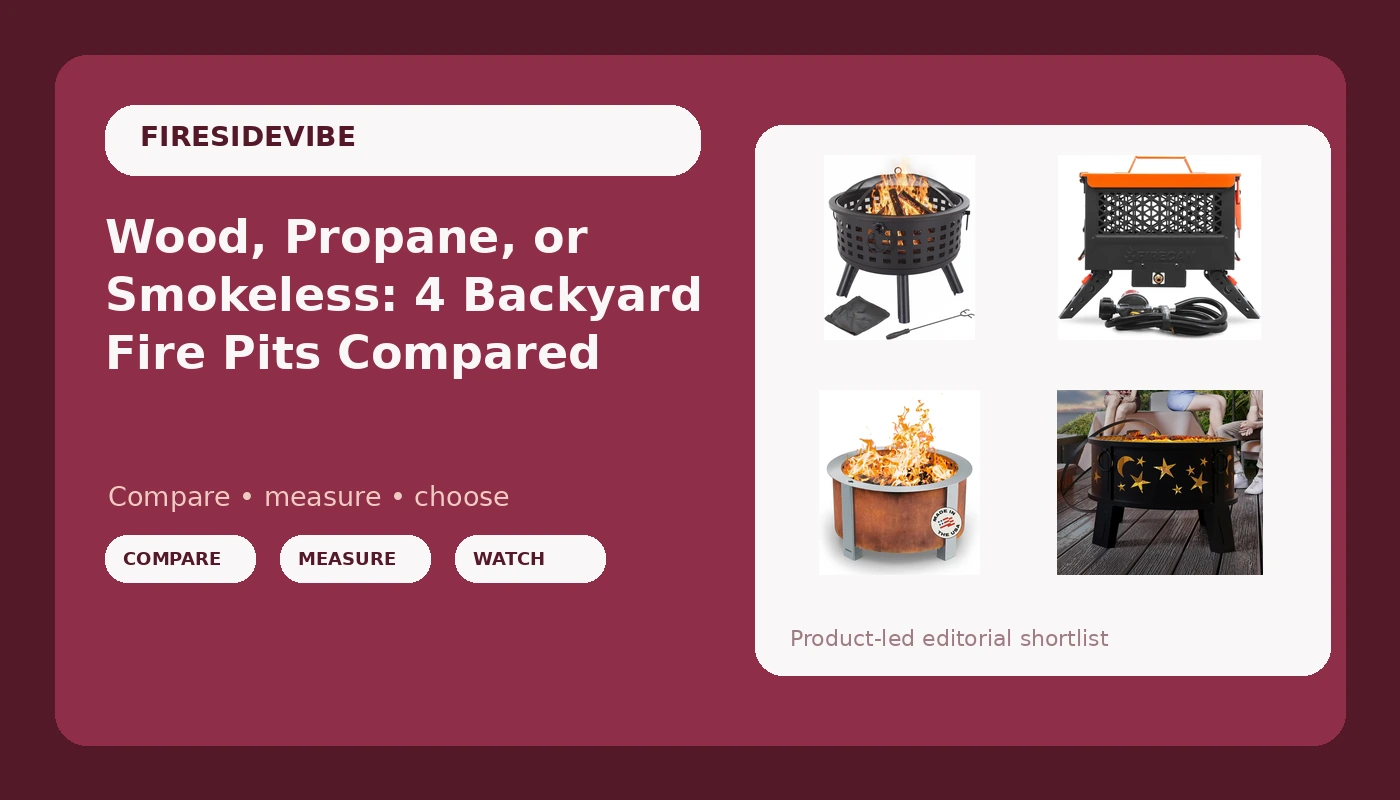
I have been building and installing outdoor fire pits around Asheville for fifteen years, which means I have watched more money get thrown at thin steel and missing spark screens than at any other piece of patio gear. A backyard fire pit comparison always comes down to four questions wearing a trench coat: how thick is the steel, where does the smoke go, what catches the embers, and would the thing still be standing after a mountain winter. Answer those four and the shopping gets simple. This comparison runs four very different answers to those questions, from a pair of wood burning steel bowls to a portable propane can and a corten steel smokeless pit.
The best backyard fire pit for most people here is the Kingson 26 inch wood burner, because it arrives with the whole accessory set (grill grate, mesh cover, poker, and a star spark screen) and a bowl deep enough to hold a real fire. If smoke is what drives you back inside the house, the Breeo X Series 24 is the pit that solves it. If you want fire in about ten seconds with no ash to haul, the Ignik FireCan is the one that rides in the truck.
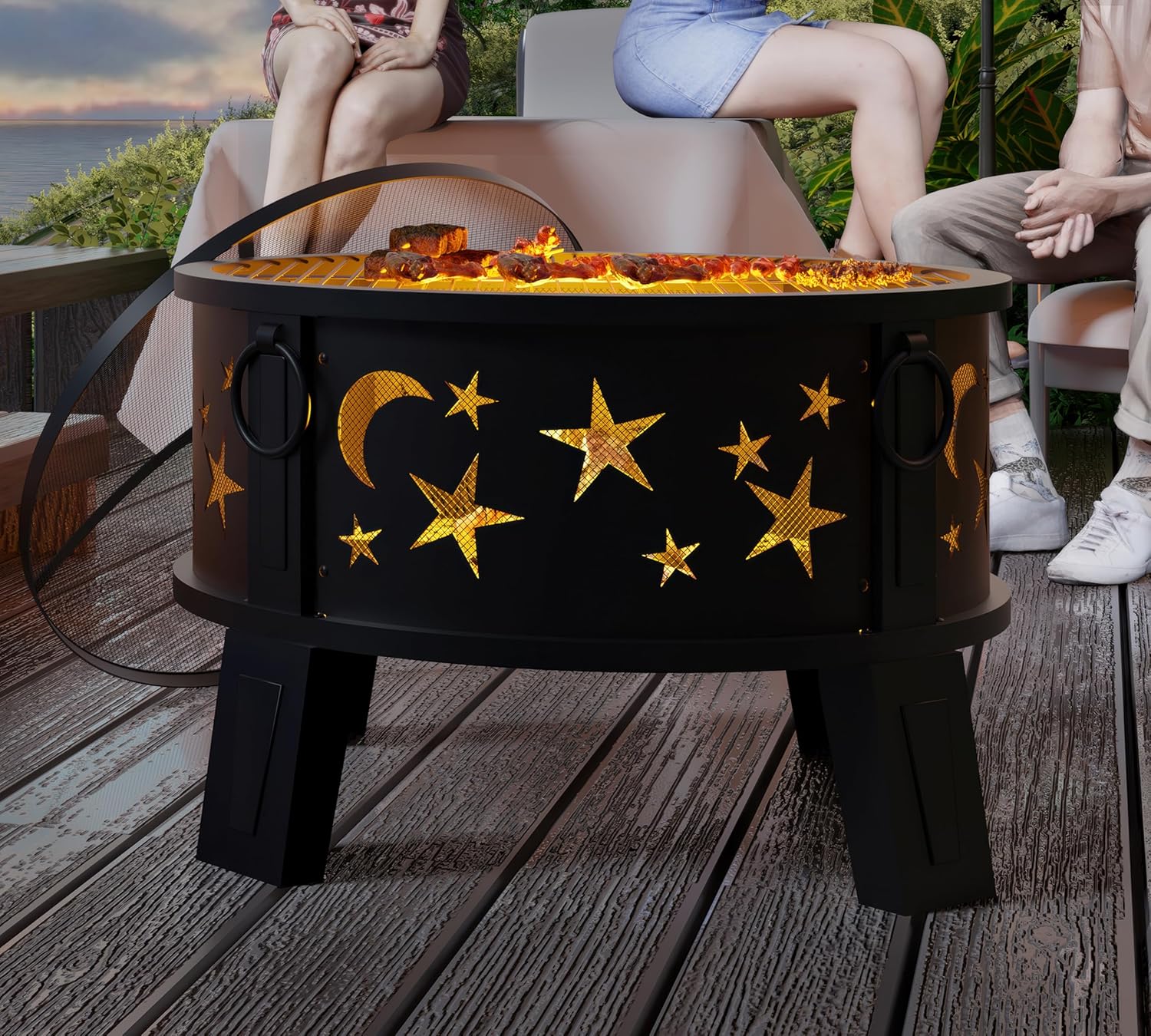
Kingson 26" Outdoor Fire Pit with Grill & Mesh Cover
The most complete kit of the two wood burners, with a grill grate, mesh cover, poker, and a star spark screen
A bowl style wood pit, so smoke still follows you around the fire
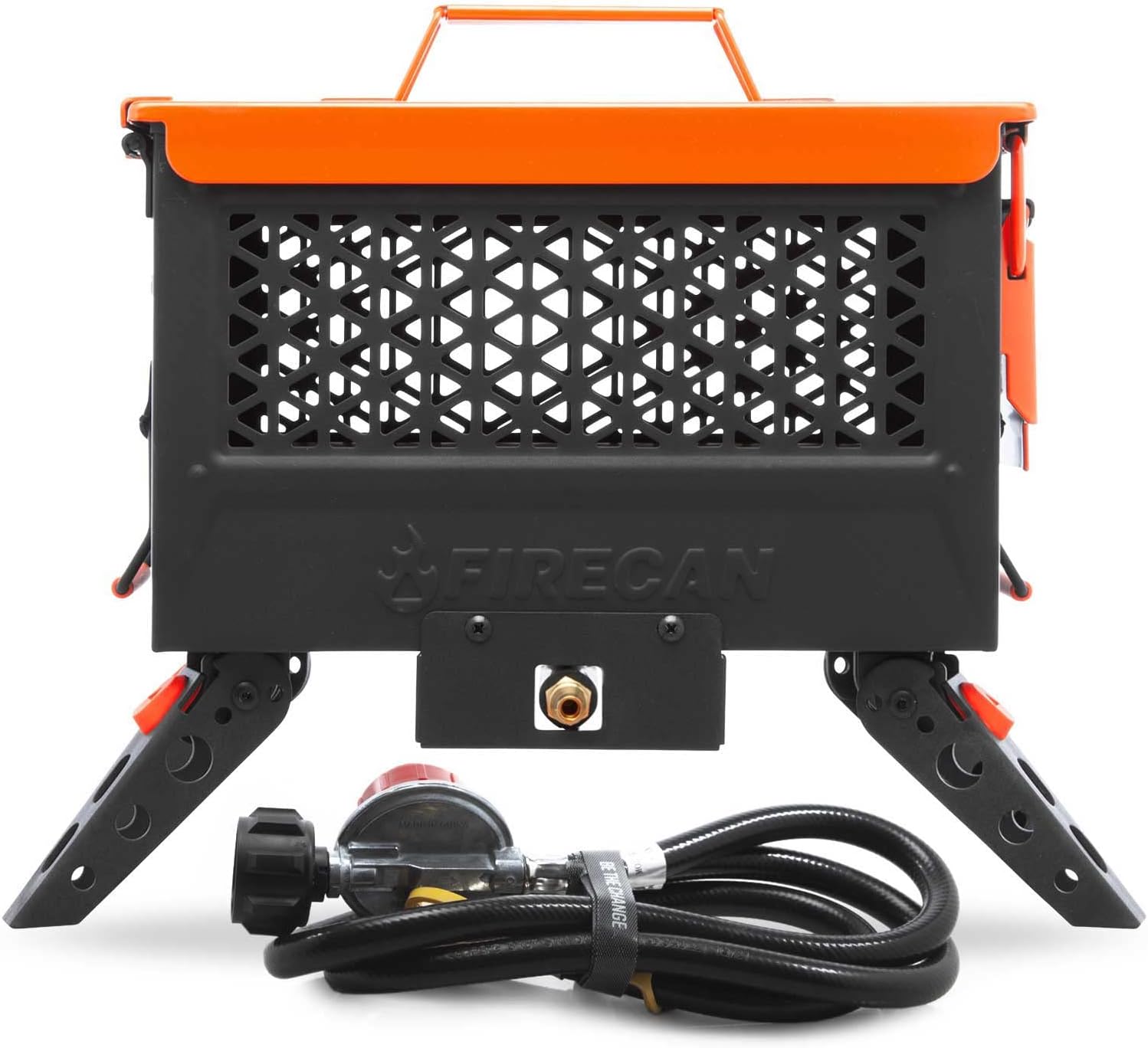
Ignik FireCan Portable Propane Fire Pit with Hose and Regulator
Instant on and off, no ash, no embers, and it packs down for the truck
Convenience, not a campfire, and it burns fuel every time you sit down
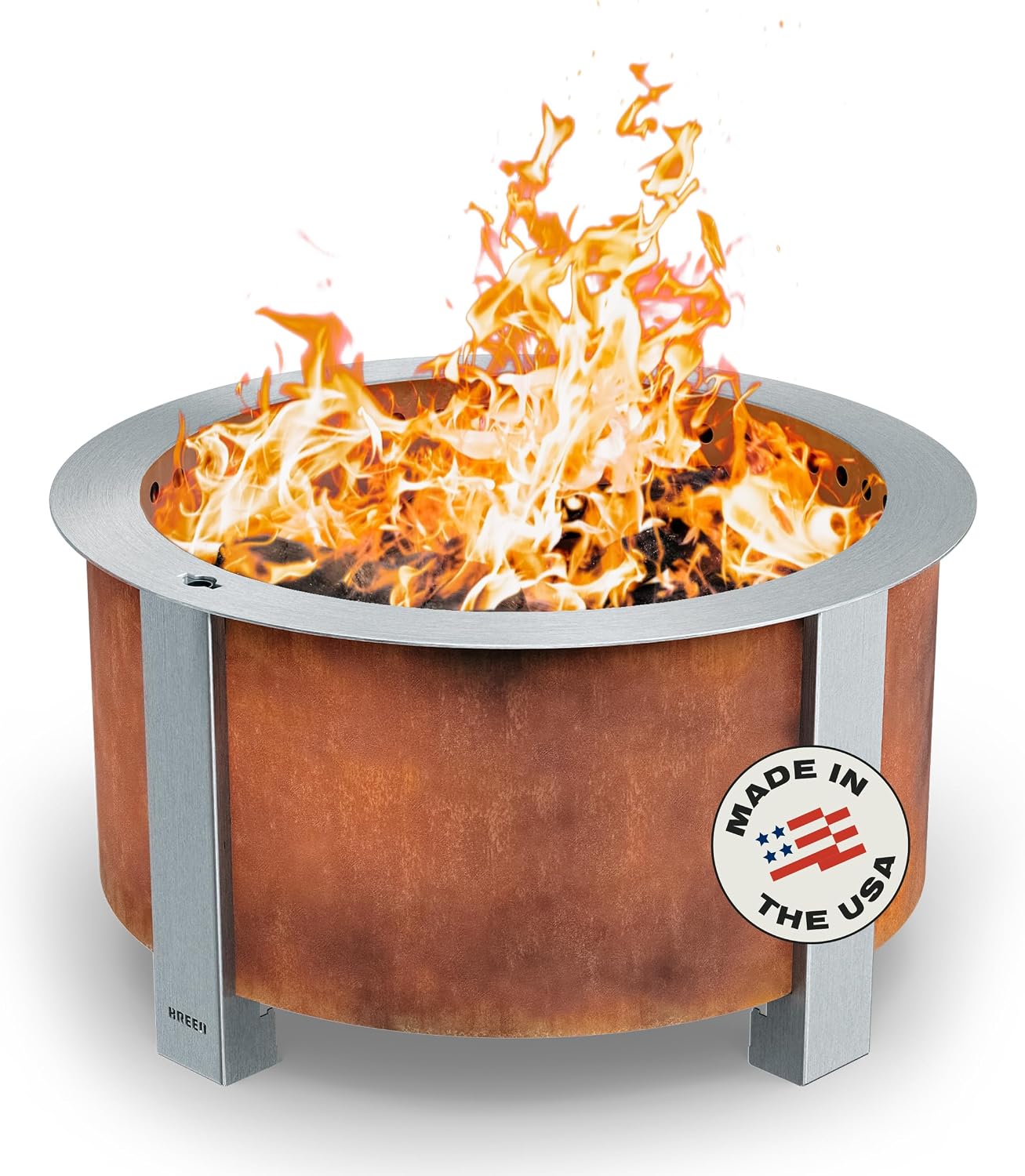
Breeo X Series 24 Corten Steel Smokeless Fire Pit
Corten steel that ages instead of flaking, and a smokeless design that keeps the seating circle usable
The premium end of this group, and heavy enough that it stays where you set it
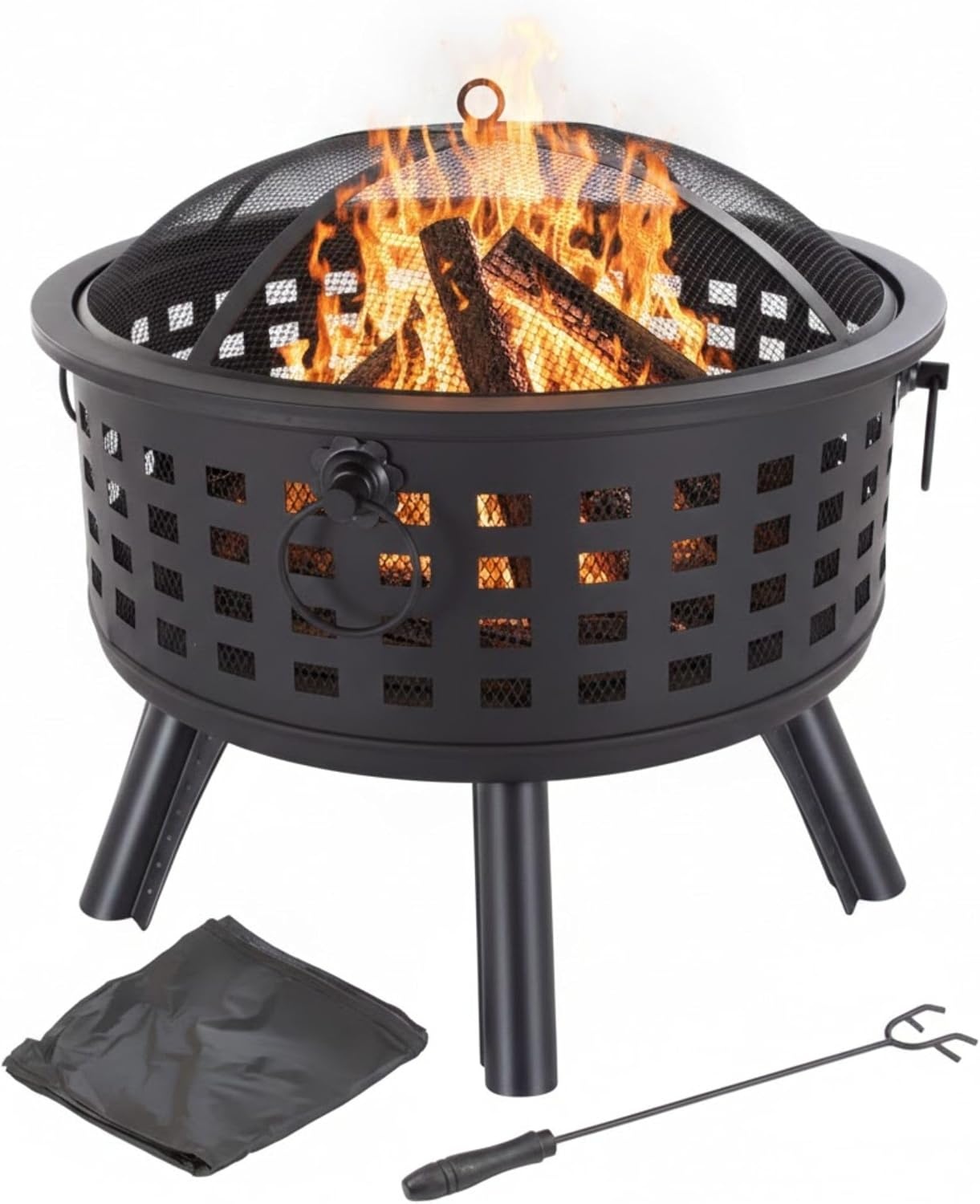
Pure Garden 26-Inch Round Lattice Wood Burning Fire Pit
Comes with a screen, poker, grate, and cover, and the lattice body looks like furniture
Same smoke problem as any bowl, and the thin parts are the first to go
Prices and availability were captured from Amazon Creators API and may change.
How I judge a fire pit
Fire is simple. Steel and airflow are the only things that are hard. Every pit I look at gets the same four checks, and none of them are about styling.
Steel gauge. The thickness of the metal is the lifespan of the pit. A 1mm shell is a one season novelty that rusts through the moment it holds water. A 3mm or thicker shell is a decade of fires. Corten steel sits in a category of its own: instead of fighting the weather, it forms a stable rust layer that protects what is underneath, which is why you see it on architectural planters and bridge abutments. That is the single biggest difference between the Breeo in this group and everything else on the list.
Smoke management. A fire pit that smokes you out of your own backyard is a fireplace with a seating problem. Bowl style wood pits burn perfectly well, but they push smoke straight up and then the wind decides who gets it. Smokeless design works through a secondary burn: the double wall preheats air, feeds it back into the top of the fire, and the smoke ignites a second time instead of drifting into your face. That is a real mechanical difference, not a marketing word, and it is the reason the Breeo costs what it costs.
The spark screen. Not optional. I have seen what an ember does to a deck board, and I have seen the bill that follows. Every wood pit in this comparison ships with some form of screen or mesh cover, and that is the minimum. If you ever plan to leave a fire unattended for three minutes while you go inside for another round of drinks, you want the screen on.
Weather survival. Drainage matters more than cover. A pit that holds water rots from the inside out, and a cover that traps moisture makes it worse. Set the pit on gravel or a paver pad, not directly on grass, and dump the ash after every few burns. Ash plus rain equals rust, every time.
The premium pick: Breeo X Series 24
The X Series 24 is the pit in this group built around one idea, which is that you should be able to sit downwind of your own fire. It is corten steel, 27.5 inches across, and the smokeless design comes from that secondary burn inside the double wall. Corten changes the ownership experience in a way that is hard to appreciate until you have owned a painted pit: there is no finish to bubble, peel, or flake off. It develops a rust patina and then, essentially, stops. Ten years from now it will look like a piece of landscape architecture instead of a rusty bowl.
The 24 inch size is the other thing worth understanding. This is a backyard pit, not a packable one. It wants a permanent spot on a patio or a gravel pad, with a couple of feet of clearance, and it wants a proper base under it because a steel pit gets hot at the bottom. Once it is set, it is set. Nobody is carrying this to a tailgate.
The trade-offs are honest ones. You are paying premium money for the smoke solution and the steel, and you are giving up the gas convenience of a propane unit, the portability of a can, and the light weight of a bowl. It is also a wood only experience, so the ritual of splitting, stacking, and starting a fire is part of the deal. If you want ambiance at the push of a button, this is the wrong pit for you, no matter how good it is.
The propane pick: Ignik FireCan
The FireCan is a different animal, and it is honest about it. This is a portable propane fire pit with a hose and regulator, which means it runs off a standard propane tank rather than a disposable cartridge, and it lights when you want it and stops when you want to go to bed. No kindling. No ash. No embers. No waiting for coals.
That combination solves the three most common reasons people stop using a fire pit: it is too much work to start, it is too much work to clean, and the smoke chases everyone inside. A propane unit sidesteps all three. It is also the only pit here you can genuinely take camping, because it packs down and there is no ash to deal with at a campsite that would rather you did not leave a fire scar.
What you give up is the thing that makes a fire a fire. There is no crackle, no log collapsing into coals, no smell in your jacket the next morning. Propane heat is also more directional and less radiant than a real wood fire, so the people closest to it are warm and everyone else is wearing a jacket. That is not a flaw, it is physics. Buy the FireCan because you want the gathering without the smoke and the labor, and do not pretend you bought a campfire.
The wood burners: Kingson and Pure Garden
These two are the traditional answer, and for a lot of backyards they are still the right one.
The Kingson 26 inch pit is the more complete package of the pair. It is a wood burning steel firepit with a poker, a mesh cover, and a star pattern spark screen, plus a grill grate, which is the feature I would point at first. Cooking over an open fire is the thing that turns a fire pit from a decoration into a piece of equipment. Sausages, peppers, a cast iron pan of whatever you brought, all of it works over a grate that sits above real coals. The star spark screen is a nicer touch than a plain mesh dome, because it lets more heat out while still catching the embers, and the bowl shape is deep enough to build a fire that lasts an evening instead of twenty minutes. It is also marketed for camping and garden use, and while I would not call a 26 inch steel bowl a backpacking item, it moves around a yard without a second person.
The Pure Garden pit is the same basic formula with a different personality. It is a 26 inch round lattice design, wood burning, and it comes with a screen, poker, grate, and cover. The lattice body is the reason to pick it: the pattern lets air in at the base and lets firelight out through the sides, which is the look most people picture when they imagine a backyard fire. It reads like patio furniture rather than a fire appliance, and if the pit lives on a deck or a stone patio in view of the kitchen window, that matters more than specs.
What both of these ask you to accept is smoke management as an ongoing project. You manage it by burning dry, seasoned hardwood instead of damp junk, by not overloading the bowl, by keeping the fire small and hot rather than big and smoldering, and by paying attention to which way the air is moving. Do those things and a bowl pit is a pleasure. Ignore them and you will be the person who moved their chair four times in one evening.
The other thing to watch on any bowl style pit is the thin parts. Legs, handles, and poker loops are where the metal is thinnest and where rust starts. If a pit is going to fail early, that is where it happens. Keep the cover on when it rains, dump the ash, and you will get years instead of seasons.
What each pit asks you to give up
There is no free option here, so be honest about the trade you are making.
The Breeo asks for money and a permanent address. You get the best smoke behavior and the longest lifespan of the group, and you pay for both up front and in the fact that it is not moving.
The Ignik FireCan asks you to give up the fire itself. You get speed, cleanliness, and portability, and you accept that you are buying ambiance on demand rather than a wood fire.
The Kingson asks for a little more attention at setup and cleanup than a gas unit. You get a full kit with cooking capability and a spark screen, and you accept that smoke is part of the evening.
The Pure Garden asks the same, with a look that suits a patio better than a campsite. You get the classic lattice glow and a complete accessory bundle, and you accept the same smoke reality as any bowl.
If I had to rank the risk in each purchase: the biggest risk on a bowl pit is rust in the thin spots and smoke on a still evening. The biggest risk on a propane unit is that you miss the ritual. The biggest risk on a premium smokeless pit is that you spend the money and then use it three times a summer.
Who should buy which
Buy the Breeo X Series 24 if the fire pit is going to be a permanent feature of a finished backyard, you burn wood regularly, and the smoke is the thing that currently ruins your evenings. This is the pit for the person who has already owned a cheap bowl and is tired of replacing it.
Buy the Ignik FireCan if you split your fires between a patio and a campsite, you want flame without ash, or you have neighbors close enough that smoke is a diplomatic issue. It is the most flexible unit here and the easiest to live with.
Buy the Kingson 26 inch if you want one purchase that covers the fire, the screen, the cover, the poker, and cooking over coals. It is the most complete single box in this comparison and the easiest to recommend to a first time buyer.
Buy the Pure Garden lattice pit if the pit is a visual anchor for a patio and you want that open, glowing lattice look without paying premium money for it.
The last word
The best fire pit is the one that makes your friends stay until the logs are ash. Everything else, the gauge, the screen, the secondary burn, the patina, is just what it takes to get there. Decide first whether you are a wood person or a convenience person, then decide whether the pit is staying put or going in the truck. Those two answers eliminate three of these four pits before you ever look at a listing, and the one that is left is the one you will actually use.
Start with steel thickness and a real spark screen. Everything after that is preference.