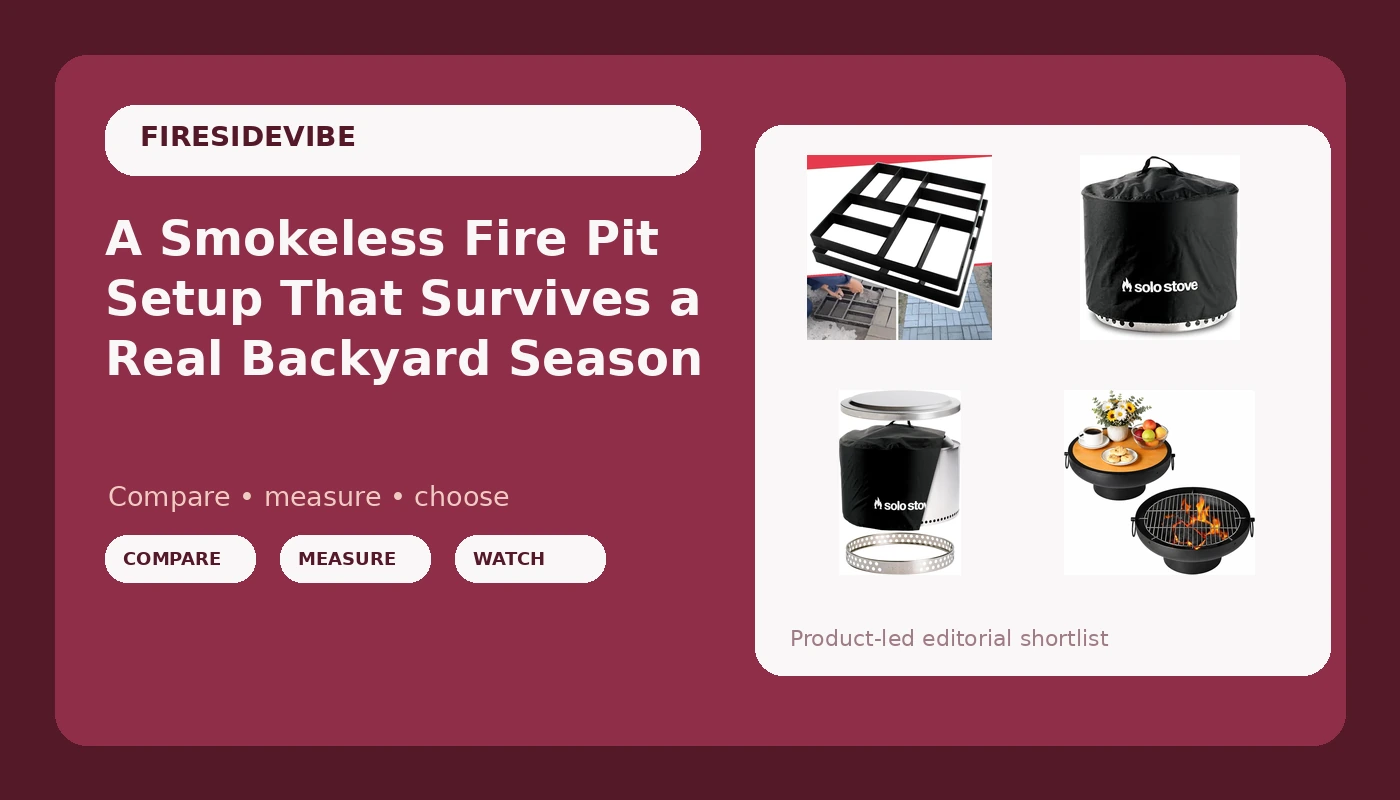
A smokeless fire pit setup is three decisions, not one: the pit itself, the cover that keeps weather out of it, and the ground you cross to reach it. Get the pit right and you get heat without the smoke following you around the fire. Get the other two wrong and you will be replacing a rusted bowl in eighteen months and stepping over a mud rut every time you carry an armload of wood.
I have built and torn out fire pits in client backyards for fifteen years, from fifty dollar chimineas that cracked in a single season to steel behemoths that will outlive the deck they sit on. The pattern never changes. People buy the pit first, then discover they needed a cover, a lid, and a place to stand.
This is the order I would actually spend the money in.
Related: Best Smokeless Fire Pit for Small Backyards
Steel gauge comes before brand names
Every pit in this guide is a compromise somewhere, so start with the thing you cannot upgrade later. Steel gauge is the thickness of the metal, and it decides the lifespan. Three millimeters and up is a decade of fires. One millimeter is a one season novelty that rusts through the first time it sits out in the rain. If a listing will not tell you the gauge, that silence is an answer.
The second thing is smoke. Smokeless design means double wall construction that pulls air back into the top of the fire so the smoke burns a second time, which is the difference between a fire night and a smoke detector night. It is real, it works, and it changes how a fire pit feels to sit next to.
The third is the spark screen, or a lid that does the same job. It is not optional. I have seen what an ember does to a deck.
Solo Stove Yukon Amazon Exclusive Bundle: the centerpiece
The Yukon is the 27 inch version of Solo Stove's smokeless design, which puts it in the range where a small group can sit around it without shoulder to shoulder crowding. That is the size most backyards actually need. A 19 inch pit is fine for two people and a dog. Twenty seven inches is a real gathering pit.
What you are paying for is the secondary burn. Air gets pulled back into the firebox and the smoke that would otherwise drift into your face gets burned again at the top of the pit. If you have ever spent an evening rotating your chair around a fire, following the smoke like it has a grudge against you, that is the problem this design solves.
The tradeoffs are real and worth saying out loud. Smokeless pits burn hotter and cleaner, but they send more of that heat straight up than out, so the warmth is not the same as a wide, shallow steel bowl with a screen. You get a fire you can sit next to without crying, not a fire that heats your knees from six feet away. They also want dry, seasoned wood. Wet wood defeats the secondary burn and you are back to smoke in your eyes.
The bundle is the version listed here. Compare it against the standalone listing before you commit, because what gets bundled changes over time, and the extras paired with a pit are usually the ones you would end up buying anyway.
Fire Pit Table with BBQ Grill and Waterproof Lid: the cook and sit option
This is a different animal, and it is the one I would look at if your fire pit nights usually turn into dinner. It is a table height pit with a grill grate over the fire and a waterproof lid that closes it up when you are done. That combination solves two problems at once. You get a flat surface for plates and drinks, and you get a place to cook over live fire without owning a second appliance.
The lid is the part people underrate. A table height pit collects water, leaves, and whatever the dog knocks off the table. A lid that actually seals means you open it to a dry firebox instead of a wet one, and a dry firebox is the whole difference between a pit that gets used on a Tuesday and a pit that becomes a planter.
Two things to think about. Table height pits are for sitting, not for standing around, so they work best with chairs at a fixed distance and a small group. And a grill grate over a fire needs attention, which means you are cooking at the pit rather than sitting across the yard from it. If that sounds like the good part of the evening, this is your pit. If you want to light it and walk away, it is not.
Solo Stove Bonfire Shelter: the cover that decides year two
A fire pit that cannot survive a season of rain was a decoration, not a purchase. This is the cheapest insurance in the guide and the one people skip, because it is not the fun part of the order.
The Bonfire Shelter is a waterproof, weather resistant cover built for Solo Stove's Bonfire. That makes the fit question the important one. Measure the outside diameter of your own pit before you order, and if you are covering a Yukon or a third party bowl, check the dimensions rather than assuming. A cover that is too loose flaps in the wind and pools water on top. A cover that is too tight will not go back on after a hot night.
The case for a cover is simple. Stainless steel still pits. Ash plus moisture is corrosive, and the rim and the base are where it starts. A covered pit in the spring looks like the pit you bought. An uncovered one looks like a project. If you spent real money on a smokeless pit, spend a little more keeping it that way.
Anothera Walk Path Maker molds: the part nobody plans for
The last piece is the ground. Two molds in a pack, each casting an eight grid paver about 15.7 inches square and 1.57 inches thick, from concrete you mix yourself. You fill the mold, let it cure, and set the pavers into the approach to the fire area.
Why does this matter? Because a fire pit is only as good as the ten feet around it. Grass gets trampled to mud. Gravel migrates into the lawn and ends up in the house. A hard, level path means you can carry an armload of wood in the dark without rolling an ankle, and it means the chairs sit level instead of sinking on one side.
One note on placement. Do not treat these as the surface the fire pit sits on unless you know how your pit handles heat. Use them for the path and the seating area, and keep the pit on gravel, stone, or whatever non combustible base you have already planned.
The smokeless fire pit setup reference table
This is how the four pieces fit together, and the order I would buy them in.
| Product | Role in the setup | What it handles | Notes |
|---|---|---|---|
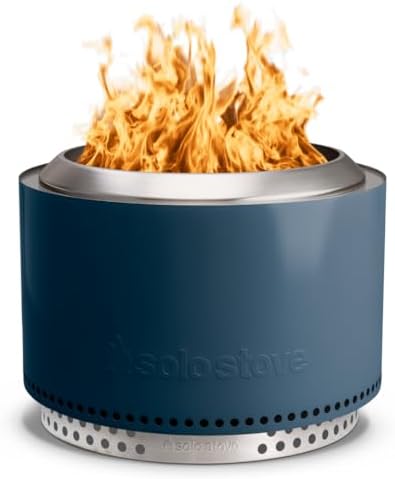 Visit on Amazon → Visit on Amazon →Solo Stove Yukon Amazon Exclusive Bundle |
Main pit | 27 inch smokeless wood burning | Compare the bundle against the standalone listing |
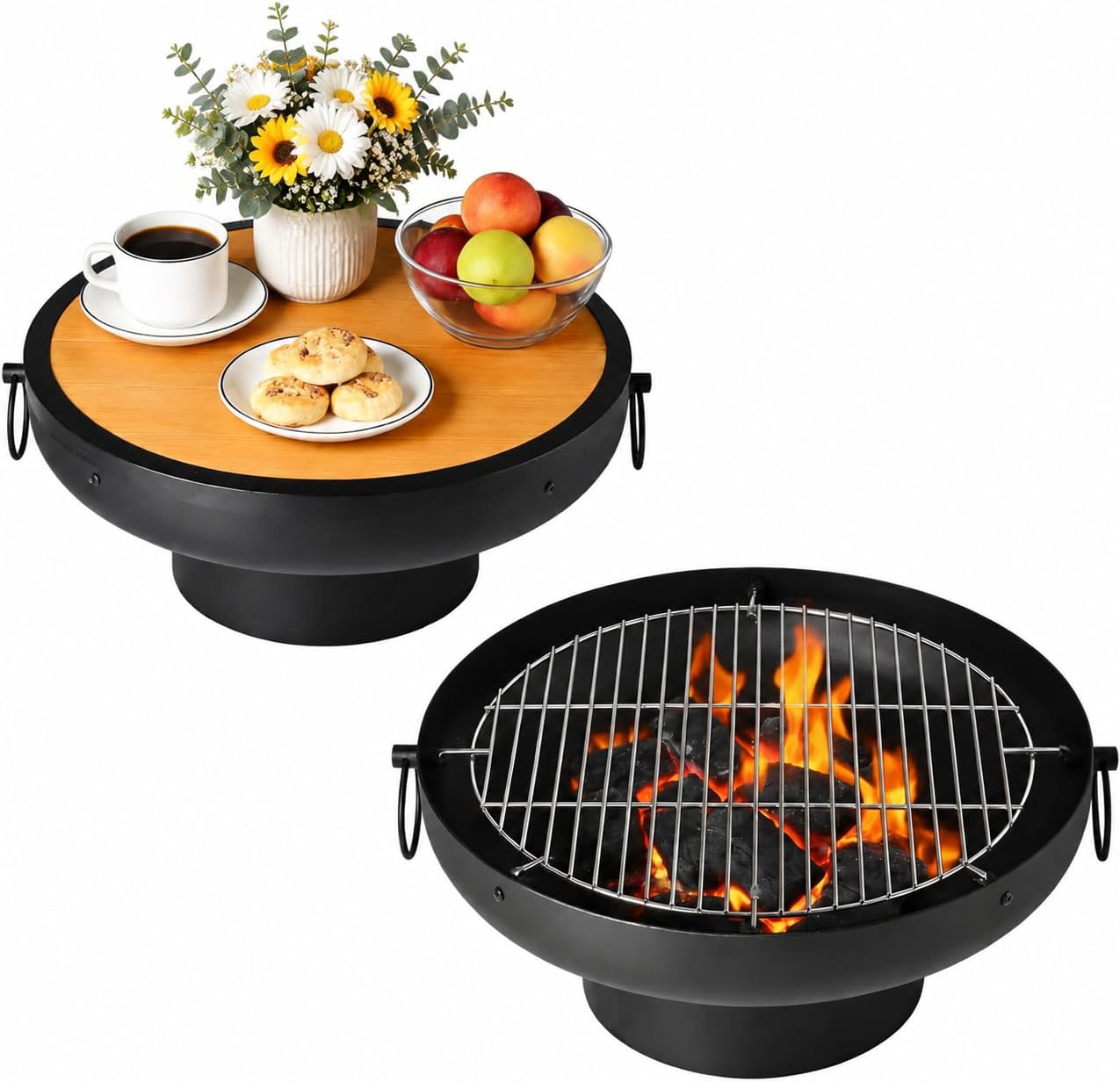 Visit on Amazon → Visit on Amazon →Fire Pit Table with BBQ Grill and Waterproof Lid |
Cook and sit | Grill grate plus a sealing lid | Table height, so plan for chairs |
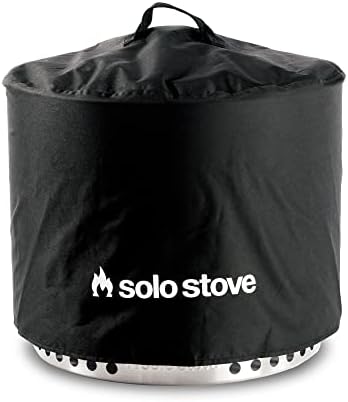 Visit on Amazon → Visit on Amazon →Solo Stove Bonfire Shelter |
Cover | Waterproof weather protection | Measure your pit diameter first |
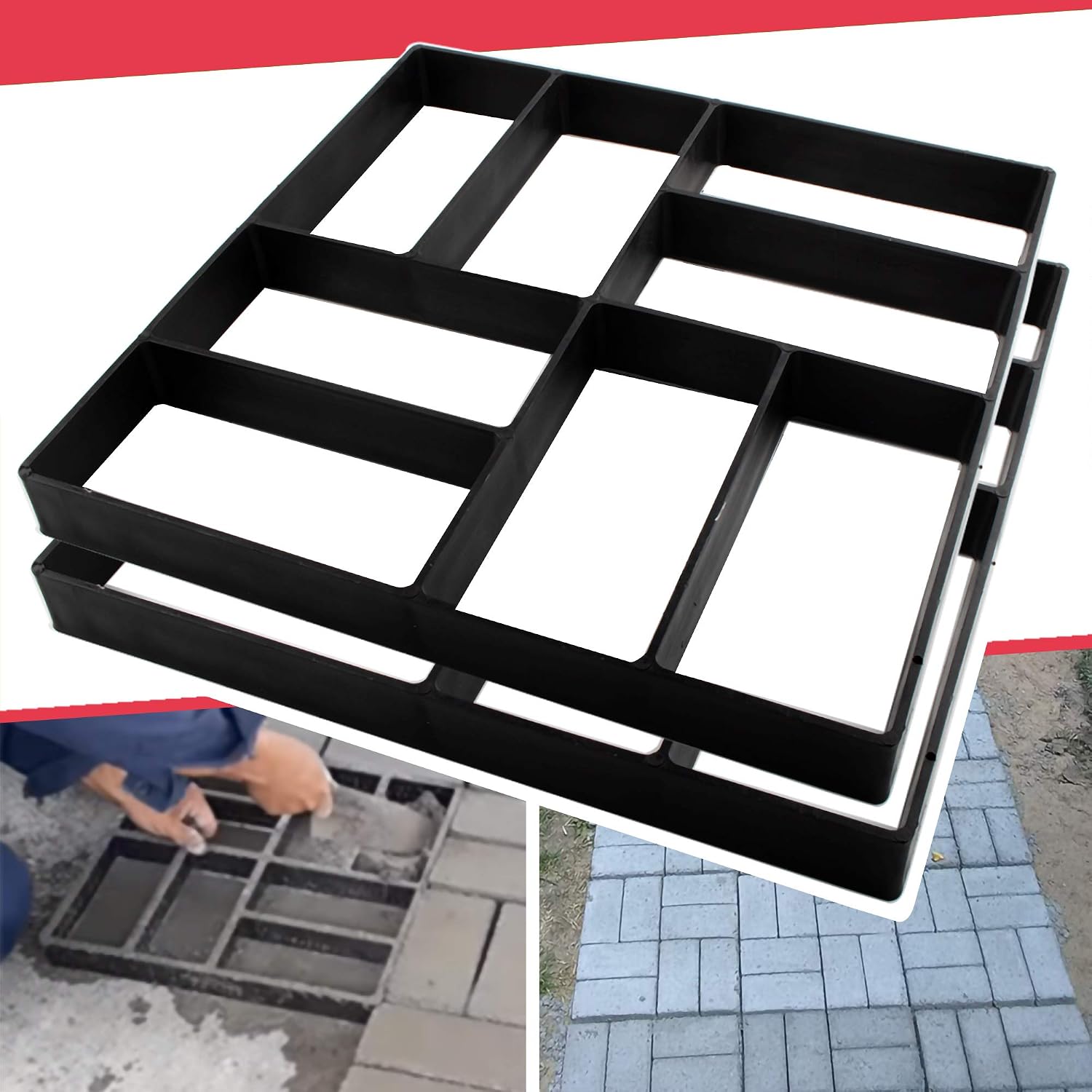 Visit on Amazon → Visit on Amazon →Anothera Walk Path Maker molds |
Approach | Eight grid pavers, two molds per pack | Use for the path, not under the fire |
How I judge a fire pit setup
Four questions, in order, every time.
What is the steel gauge? A pit that will not tell you is usually hiding thin metal. Thin steel flexes, warps, and rusts. If you are buying for permanence, this is the number that matters more than any feature list.
Does the smoke follow you around the fire? This is the only test that matters on a still night. Smokeless design answers it with a secondary burn. A conventional bowl answers it with a spark screen, a lot of airflow, and hope. I will not call anything smokeless without sitting downwind of it.
Is there a real spark screen or a lid? A pit without one is an open fire with better marketing. On a wood deck, this stops being a preference and becomes the reason you still have a deck.
Would it still be standing after a season of weather? Rain, ash, and freeze thaw cycles are what kill fire pits, not fire. A cover is the cheapest way to answer this question yes.
The molds answer a fifth question nobody asks until the first wet fall: where do people actually stand?
What actually matters, and what is marketing
Size over features. A 27 inch pit is a gathering pit. A 19 inch pit is a two chair pit. Buy for the number of people who actually show up, not the number you imagine.
Smokeless is a design, not a sticker. Double wall construction with a secondary burn is the real thing. A single wall bowl with the word smokeless in the title is not.
Radiant heat is a tradeoff, not a defect. Smokeless pits throw heat upward more than outward. If you want the heat on your shins, sit closer or choose a wider, shallower bowl.
Wood is the experience, gas is the convenience. This is a wood setup. Every piece here assumes real logs, real ash, and a real reason to be outside. If you want a switch and instant ambiance, this is the wrong list.
The accessories are not upsells. The cover protects the investment. The lid protects the firebox. The pavers protect your ankles. In that order, they matter more than the pit's finish options.
Should you buy the Solo Stove Yukon Amazon Exclusive Bundle?
Yes, if you want a wood fire without the smoke following you around the fire. The 27 inch size fits a family, the secondary burn is the real version of the technology rather than a label, and it is the pit I would put at the center of a backyard that gets used.
Know what you are buying. The heat goes up more than out, so do not expect a wide steel bowl's radiant warmth. It wants dry, seasoned wood. And compare the bundle against the standalone listing, because bundle contents change and the better value flips with them.
Should you buy the Fire Pit Table with BBQ Grill and Waterproof Lid?
Yes, if your fire nights are really dinner nights. A table surface plus a grill grate plus a lid that keeps the firebox dry covers three needs with one footprint, which is hard to beat in a small yard.
No, if you want to light a fire and forget it. Cooking over a grate is a hands on evening, and a table height pit is a sitting pit, not a standing around pit.
Should you buy the Solo Stove Bonfire Shelter?
Yes, if your pit lives outside, which is most pits. It is waterproof, weather resistant, and sized for the Bonfire, so check your own pit's diameter before ordering. The cost of a cover is nothing next to the cost of replacing a pit that rusted because it sat full of wet ash all winter.
Should you buy the Anothera Walk Path Maker molds?
Yes, if the ground around your fire pit is bare dirt, trampled grass, or gravel that wanders. Two molds, eight grid pavers per pack, a bag of concrete, and a weekend gets you a path that makes the whole setup feel finished. It is the least glamorous purchase in this guide and the one guests will never notice, which is exactly the point.
The bottom line
A fire pit is a system, not a purchase. The pit decides whether you can sit downwind without crying. The cover decides whether it is still there in year three. The lid or screen decides whether your deck survives. The pavers decide whether you can get to it in the dark.
Buy the pit you will actually use, protect it like it cost what it cost, and build the ten feet around it. Then invite people over and let the fire do the rest. The best fire pit setup is the one that keeps your friends outside until the logs are ash.