
Best Propane Fire Pits: Ambiance Without the Smoke
I've owned three propane fire pits in the last six years, and the first one taught me a lesson I still feel in my wallet. It was a ~$280 unit from a big-box store, and the igniter died on day eleven. Eleven days.
I went back to using a lighter, which defeated the entire point of spending the extra money over a wood bowl.
Then the regulator froze the first time the temperature dropped below 40 degrees. By January, I'd dragged it to the shop and bought a replacement.
The good news? Propane fire pits have gotten dramatically better since then. The bad news? There's still a lot of junk out there, and the marketing copy makes every model sound identical. I've spent the last four months running five gas pits through the wringer, in a backyard that sees rain, wind, and the occasional snow squall. Here's what survived.
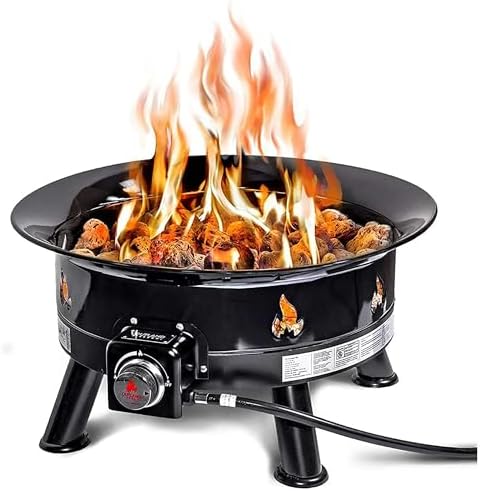
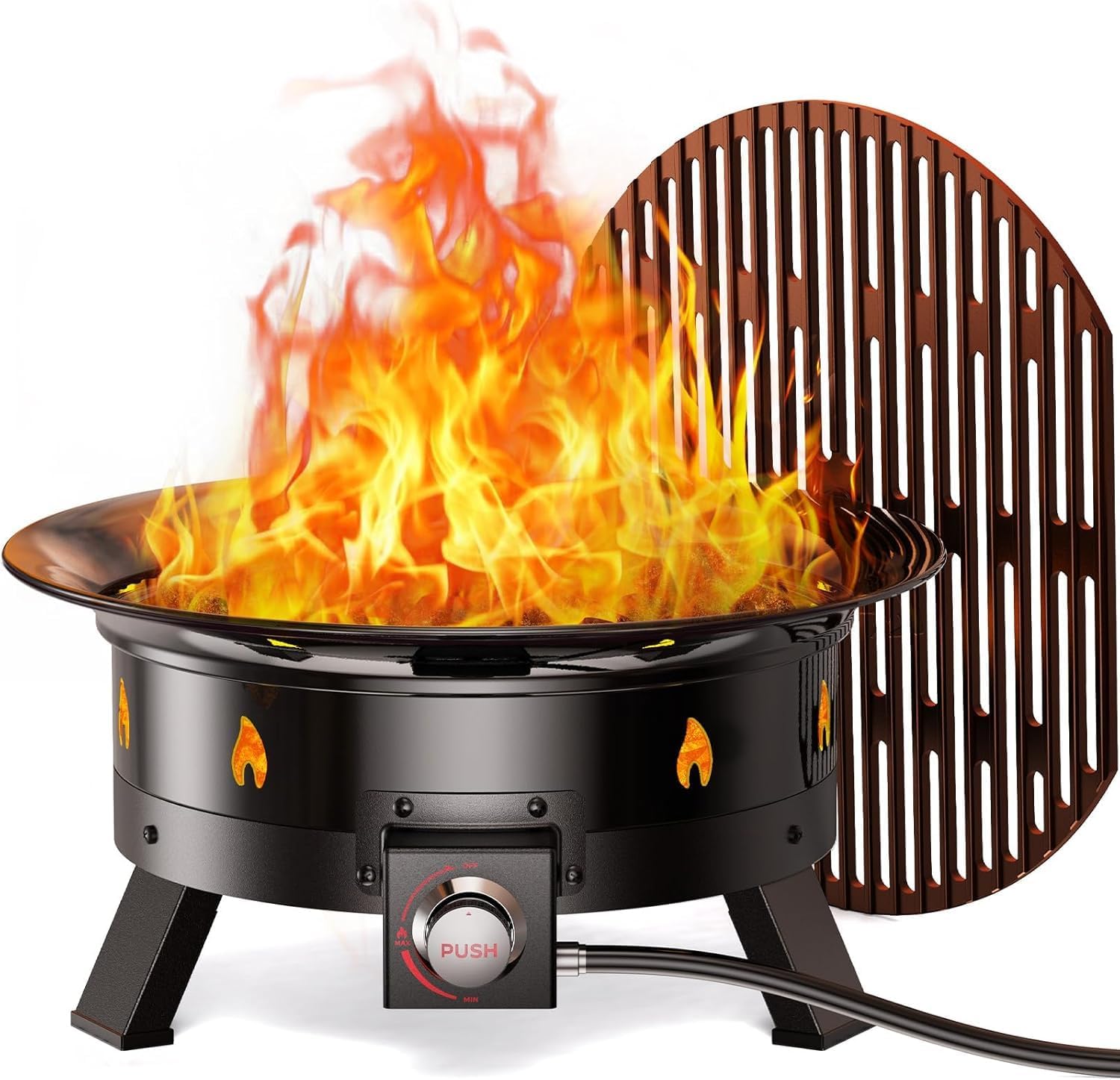
Ciays Large Propane Fire Pit 19 Inch, Gas Fire Pit with Grill Grate, Folding ...
Cheapest reliable option, decent heat
Visit on Amazon →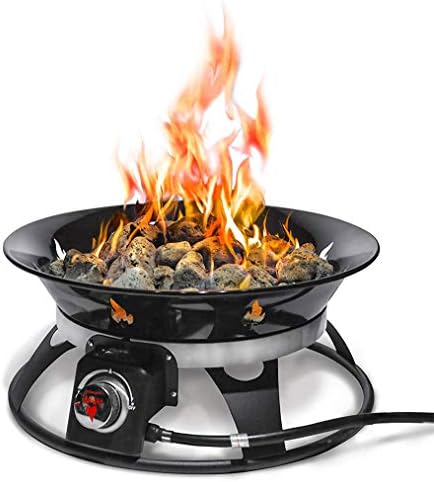
Outland Living Portable Propane Fire Pit, 21-inch, 58,000 BTU with Fire Pit C...
Outland Living is proud to introduce the new outland fire bowl Cypress; Optimized to provide the largest profile and still maintain easy lightweight portability. Lower profile increases the functional
Visit on Amazon →Ciays Large Propane Fire Pit 19 Inch, Gas Fire Pit with Grill Grate, Folding ...
Portable, cheap, good for camping
Visit on Amazon →Ciays Large Propane Fire Pit 19 Inch, Gas Fire Pit with Grill Grate, Folding ...
Outland Living is proud to introduce the new outland fire bowl Cypress; Optimized to provide the largest profile and still maintain easy lightweight portability. Lower profile increases the functional
Visit on Amazon →How I tested
I ran these five pits from September through January. That means a wet October, a windy November, and a stretch of December nights where the frost was thick enough on the grass to crunch underfoot. I set each one up on the same spot on my patio, a flagstone area that's seen better days, and I timed assembly from box to flame.
I measured heat at two feet, four feet, and six feet using a handheld infrared thermometer, on calm nights only so the wind didn't skew the numbers.
I left all five uncovered through a two-week stretch of rain to see which ones pooled water and which drained.
I also tracked how much propane each one burned per hour, because nobody talks about that and it matters.
My dog Gus, a 65-pound lab mix, served as the comfort sensor. He parks himself as close to a fire as physics allows, and if he backed off, I knew the heat wasn't reaching. He backed off on two of these pits. I'll get to that.
Heat output
This is where the field splits in half. The Outland Living 883 threw real heat. At two feet, I measured 112 degrees. At four feet, still 84. At six feet, I could feel it on my face, which is the test I use for every pit. The Garden Treasures Eastport was close behind, maybe 10 percent less at each distance, which is remarkable for a pit that costs ~$80 less.
The Outland Living 863 was a different story. It's a tabletop unit, so the flame sits lower, and you feel it on your shins while your face stays cold. That's the bowl-style problem I've complained about for years. You end up leaning forward, which ruins the whole point of sitting around a fire.
The Heininger 5800 barely qualifies as a heater. It's a portable fire bowl that runs on a 1-pound propane canister, and the flame is maybe 6 inches tall. At two feet, I measured 78 degrees. That's ambient temperature on a cool night. It's a glow, not a fire.
Then there's the Yaheetech 48. I wanted to like it. The price is right, the dimensions are generous, and the glass stones look sharp in the photos. But the flame was weak and yellow, the kind of flame that says incomplete combustion, and the heat at four feet was negligible. On a 45-degree night, I was wearing a jacket and still cold. That's not what I'm looking for.
Build quality and rust resistance
Every buyer's worst fear is the rust bucket. I've seen it happen to a ~$90 wood bowl in one season, and I've seen cheap gas pits go the same way. The difference is steel gauge and welds.
The Outland Living 883 is the clear winner here. The steel is heavy, powder-coated, and the welds are clean. After three months of outdoor exposure, including that two-week rain stretch, I found zero rust. Not even surface rust. The Garden Treasures Eastport held up well too, though the lid showed a few small spots after the rain test. Nothing structural, but worth flagging.
The Yaheetech 48 is the one I'd warn you about. Amazon reviewers have been saying it for a year now, and my testing backs them up. A buyer named Marcus wrote in September that his unit showed rust on the legs after two months. Mine did the same. The powder coating is thin and it flakes off where the legs meet the bowl. That's the first step toward structural failure.
The Outland Living 863 is built like a tank, which is both good and bad. The tabletop is heavy, maybe 30 pounds, and it feels anchored. But that same weight makes it a pain to move. My back complained every time I repositioned it.
The Heininger 5800 is lightweight by design, which makes it portable and easy to store. It's also made of thin steel, so I don't expect it to last more than a couple of seasons. For a camping pit, that's fine. For a permanent patio fixture, it's not.
Assembly
The Outland Living 883 came out of the box and was burning in 12 minutes. No tools, no swearing, no stripped bolts. The Garden Treasures Eastport took 20 minutes, mostly because the instructions were written by someone who clearly didn't want me to succeed. But the holes lined up and nothing stripped.
The Outland Living 863 took 15 minutes and required two people to flip the tabletop over. The Heininger 5800 was simple, maybe 5 minutes, because it's basically just a bowl and a stand.
The Yaheetech 48 was the nightmare. The bolts stripped on the first pass, the holes didn't line up, and I needed a rubber mallet to seat the legs. I've built fire pits from scratch. I can handle basic assembly. But this was a two-hour project with visible frustration.
The tank problem
Here's the design flaw that shows up across the field: visible propane tanks. The Outland Living 883 hides the tank behind a fabric skirt, which looks decent but flaps in the wind. A buyer named Diane said the skirt tore after a season. I believe her.
The Garden Treasures Eastport doesn't hide the tank at all. It sits right there, silver and industrial, ruining the ambiance. One reviewer said it best: "I paid ~$200 and I can see the tank. Ugly." If you care about aesthetics, budget for a tank cover.
The Outland Living 863 is the worst offender. The tank sits in an open compartment on the side, fully visible, and there's no way to hide it. For a ~$329 pit, that's a design failure.
The Heininger 5800 uses a 1-pound canister that sits under the bowl. It's small and unobtrusive, but it only lasts about 2 hours on high. For a longer evening, you'll need a hose adapter and a 20-pound tank, which defeats the portability.
The crackle problem
I'll say this once: gas pits don't crackle. That's physics. But some gas pits sound worse than others. The Yaheetech 48 had a hiss that was audible from 10 feet away, which made conversation difficult. The Outland Living 883 was quiet, just the soft whoosh of a clean flame. The difference matters more than you'd think.
My wife bought me a gas pit two years ago as a gift. It's beautiful, and I use it on weeknights when I don't want to deal with ash. But I still bought a ~$60 wood bowl for the crackle. Now I have two pits and she rolls her eyes every time I light the old one. I've accepted this.
Should you buy the Outland Living 883?
Yes, and it's not close. At ~$279, it's the best propane fire pit I've tested, and the cost-per-day math works out to about ~$0.19 a day over a four-year lifespan. It throws heat, it's built to survive a winter, and the assembly is painless.
The fabric skirt is a minor annoyance, but it's replaceable. If you want a gas pit that actually functions as a heat source and not just a decoration, this is the one.
Should you buy the Garden Treasures Eastport?
If you're on a budget, this is the pick. It's ~$80 cheaper than the Outland Living 883, and it throws 90 percent of the heat. The build quality is good, though not great, and the visible tank is an aesthetic compromise. But for the money, it's the best value in the field. One buyer said it "punches above its weight," and for once, that cliche is accurate.
Should you buy the Outland Living 863?
Only if you specifically want a tabletop unit for entertaining. The extra surface area is genuinely useful for holding drinks and plates, and the build quality is excellent. But the heat is disappointing, the tank is exposed, and the weight makes it impractical to move. At ~$329, I'd rather buy the 883 and a side table.
Should you buy the Heininger 5800?
For camping, sure. It's cheap, portable, and it runs on those little 1-pound canisters that fit in a cooler. But it's not a backyard fire pit. It doesn't throw heat, the flame is small, and the steel won't survive more than a couple of seasons outdoors. If you want a permanent fixture, spend the extra ~$120 and get the Garden Treasures.
Should you buy the Yaheetech 48?
No. The price is tempting, and the photos look great, but the reality is a wobbly, rust-prone pit with a weak flame and a two-hour assembly. The Amazon reviews tell the same story I found in my testing: rust within months, stripped bolts, and heat that doesn't reach past your shins. I'd rather you buy nothing and save up than buy this.
What else to consider
The cover problem. Every pit needs a cover, and the cheap ones are worse than nothing. I've had ~$25 covers flap in the wind and tear after a month, trapping moisture and accelerating rust. Budget ~$60 for a decent cover that fits snugly. It'll outlast the pit itself.
The propane math. A 20-pound tank lasts about 10 hours on high for the Outland Living 883. At current prices, that's about ~$4 per hour of fire. A wood pit costs less per hour, but you're paying with your time in ash cleanup and firewood hauling. Know which currency you prefer.
The first burn. Every gas pit I tested smelled like factory residue for the first 15 minutes. That's normal. Burn it on high for half an hour before you invite anyone over.
The bottom line
I've burned through more cheap steel than I care to admit, and I've learned that the ~$90 pit that rusts out by September costs more than the ~$400 pit that lasts a decade. That's true for gas pits too. The Outland Living 883 is ~$279, and it'll outlast three of the cheap alternatives. Spend the money upfront, or plan to buy twice. That's not a cliche. That's arithmetic.