Related: Best Smokeless Fire Pit for Small Yards: What Actually Works
I have installed a lot of backyard fire pits over fifteen years of landscape work, from fifty dollar bowls that cracked in a single season to steel behemoths that cost more than my first truck. The difference between a pit you use every week and a pit you cover with a tarp and forget has almost nothing to do with how it looks in the product photo. It comes down to three things: steel thickness, airflow, and whether the smoke follows you around the fire.
That is the whole test. Everything else is marketing. So when I look at backyard fire pits, I am asking what the steel gauge is, how the pit handles smoke, whether there is a real spark screen in the box, and whether the thing would still be standing after a season of weather. The four pits here cover the full range of answers, from a portable propane unit you can toss in the truck to a corten steel smokeless pit that will outlive your deck.
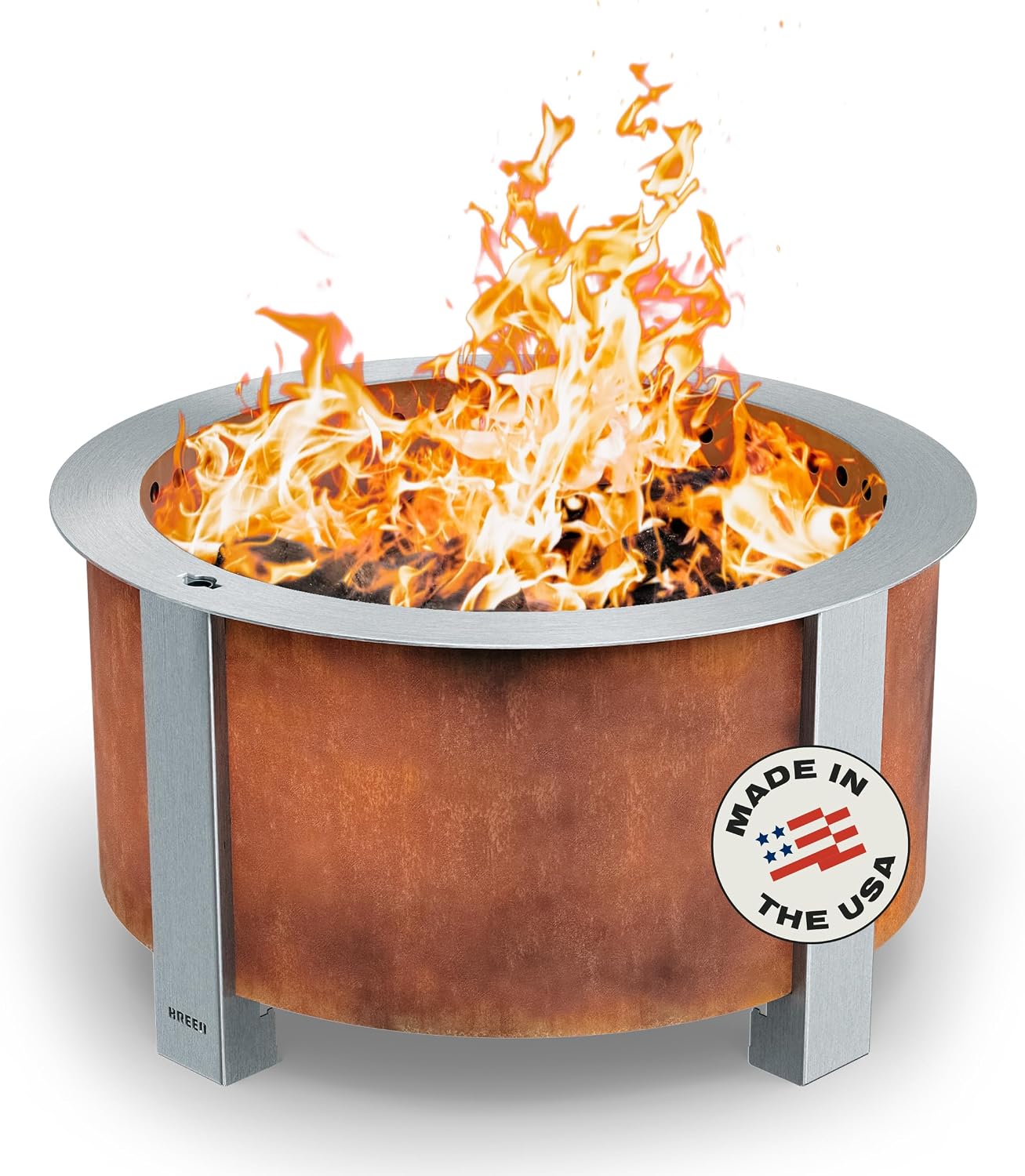
Best Smokeless Pick: Breeo X Series 24
Corten steel is what I would spec for a client who never wants to think about their fire pit again. It is the same weathering steel used in landscape edging and garden sculpture, and it does something mild steel cannot: it forms a tight, stable patina that protects the metal underneath instead of flaking off and exposing fresh rust every spring. That is why the X Series 24 is the premium pick in this group, and it is also why I would not talk you out of the price if you are planning to leave a pit in one spot for a decade.
Smokeless design is the other half of the pitch, and it is not a gimmick. A pit like this pulls air in, heats it on the way down the wall, and releases it above the fuel bed, so the smoke that would normally drift into your face burns before it gets there. Secondary burn is the technical name and it is the difference between a fire night and a smoke detector night. You sit closer, you breathe easier, and your jacket does not smell like a campground the next morning.
Twenty-seven and a half inches across is a family-sized footprint. It is not a bonfire ring, and if you want to burn four-foot logs you are shopping in the wrong category. What it is: the pit I would put in a backyard where people actually gather, on a patio or gravel pad, with a screen or lid on the list if the listing does not already include one.
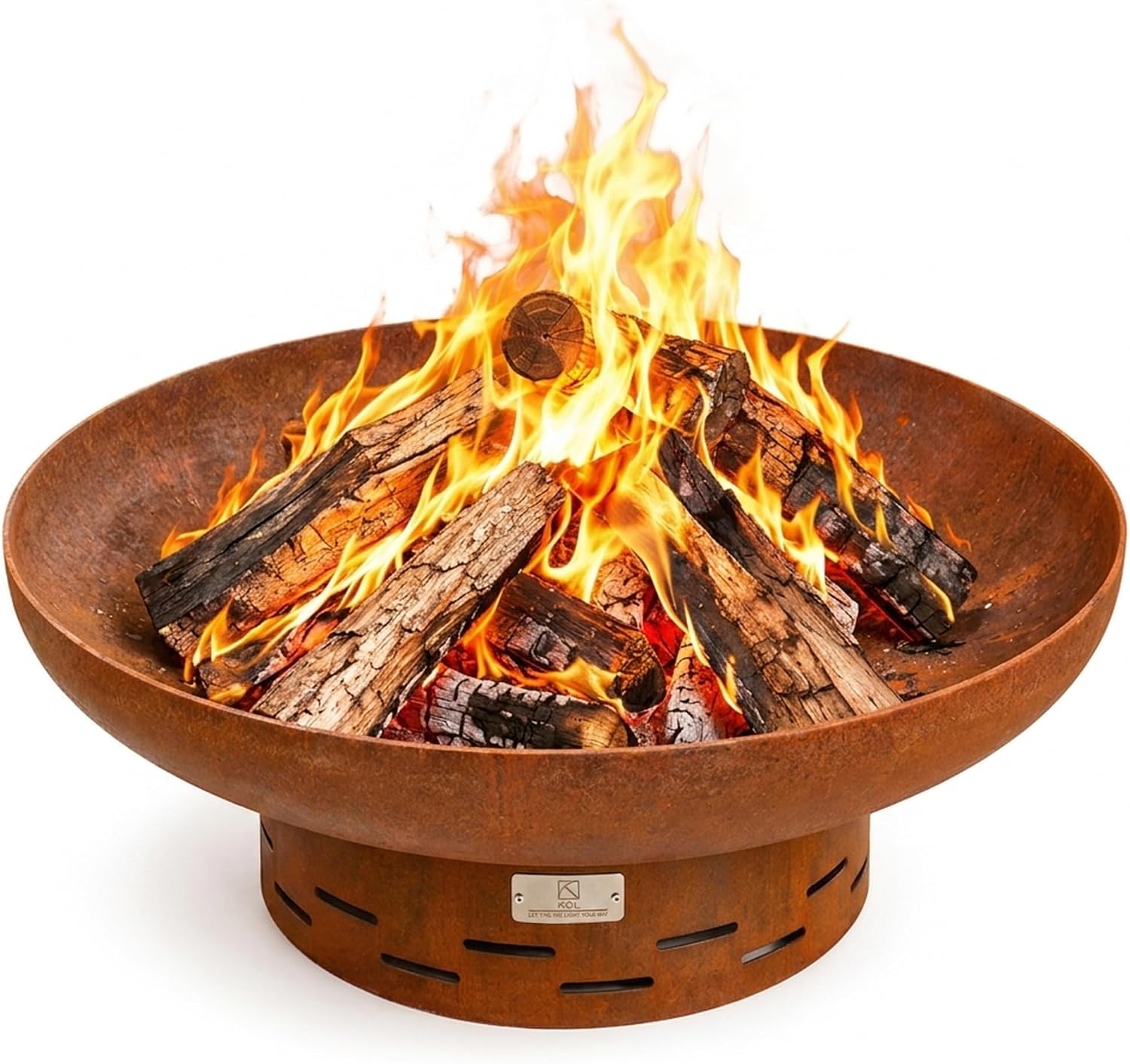
Best Wood Burning Value: KOL 27.5 Inch Round Fire Pit
The KOL is the classic bowl shape: heavy-duty steel, an oxidized finish, free-standing, 27.5 inches across, and it costs a fraction of what the Breeo runs. The oxidized finish matters more than people give it credit for, because it means the steel has already started its patina. You are not going to baby this thing. You are going to set it on a gravel pad or a stone terrace, burn wood in it, and let it look older every year, which is exactly how a fire pit should age.
The trade-off with a single-wall bowl is smoke, and I want to be honest about it. This burns wood the old way. You get the crackle, the smell, the real fire, and smoke behavior that depends entirely on wind direction and how you load it. Build the fire small and feed it often, burn dry wood, and a bowl like this behaves well. Pile it full of damp logs and the smoke will find you no matter what you paid.
Steel gauge is the number I would check before buying any bowl. Heavier steel holds heat, resists warping, and survives a winter sitting outside. Thinner steel can still be a real fire pit rather than a decoration, but it needs help, so buy a cover and use it every time. That one habit is the difference between five seasons and one.
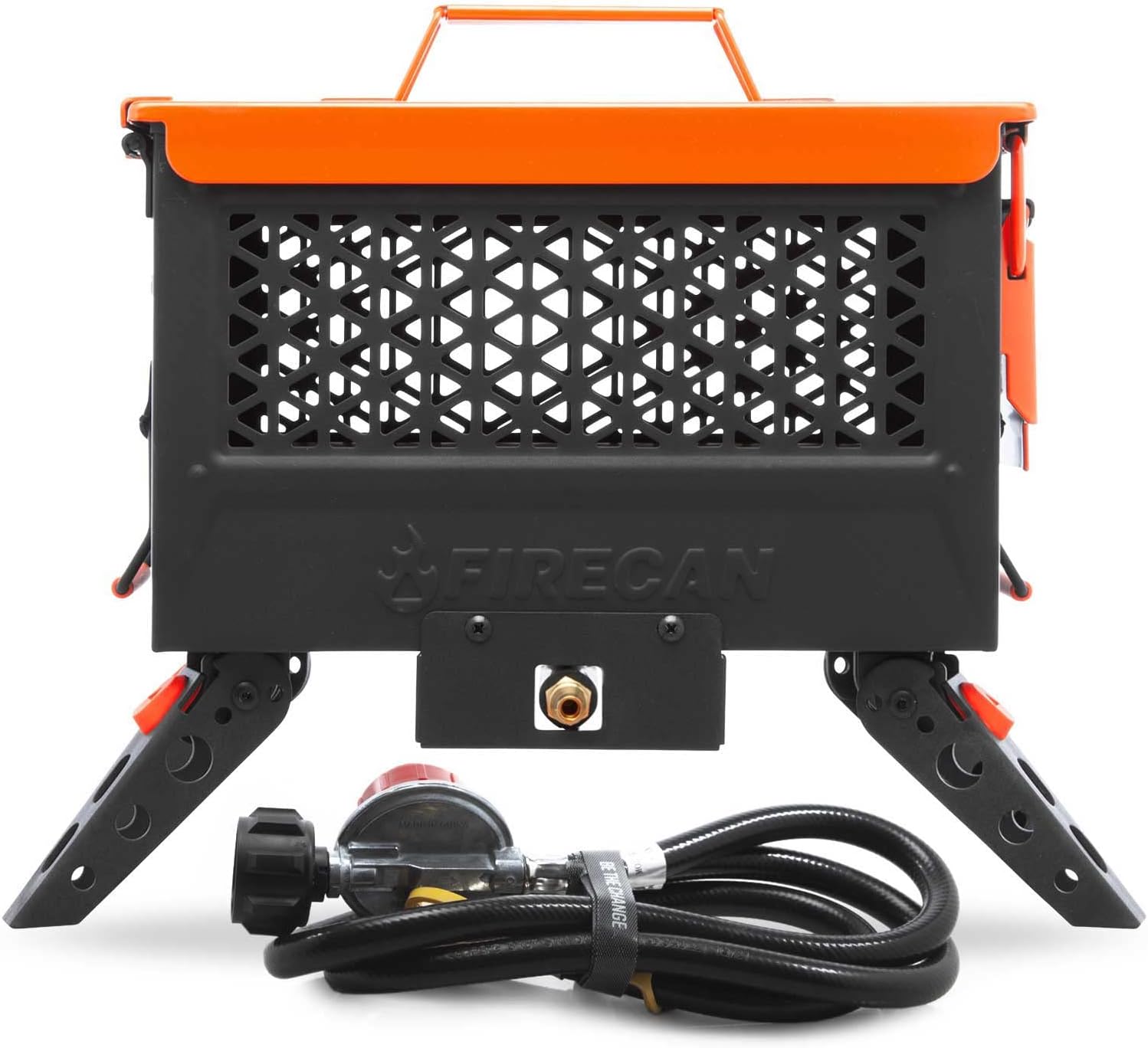
Best Gas Pick: Ignik FireCan Portable Propane Fire Pit
Gas is convenience, and I will not pretend otherwise. The Ignik FireCan runs on propane, ships with the hose and regulator you need to feed it from a standard tank, and gives you flame in seconds with no ash, no smoke, and no waiting around for coals. It is portable in a way none of the wood pits here are: pack it for a tailgate, a campsite, or a rental with a strict no-open-burn policy, and you still get a fire to sit around.
What you give up is the experience. There is no smell, no crackle, no slow ritual of building and tending. Gas heat is also directional, so it warms the side of you facing it and not much else. If your version of a fire night is a glass of wine, a blanket, and conversation, that is a fair trade. If it is poking coals and watching sparks climb, it is not.
The hose and regulator are the detail that makes this one practical rather than a novelty. A canister-style propane pit that only accepts tiny bottles is a toy. One you can run off a real tank is a tool, and that is what you are buying here.
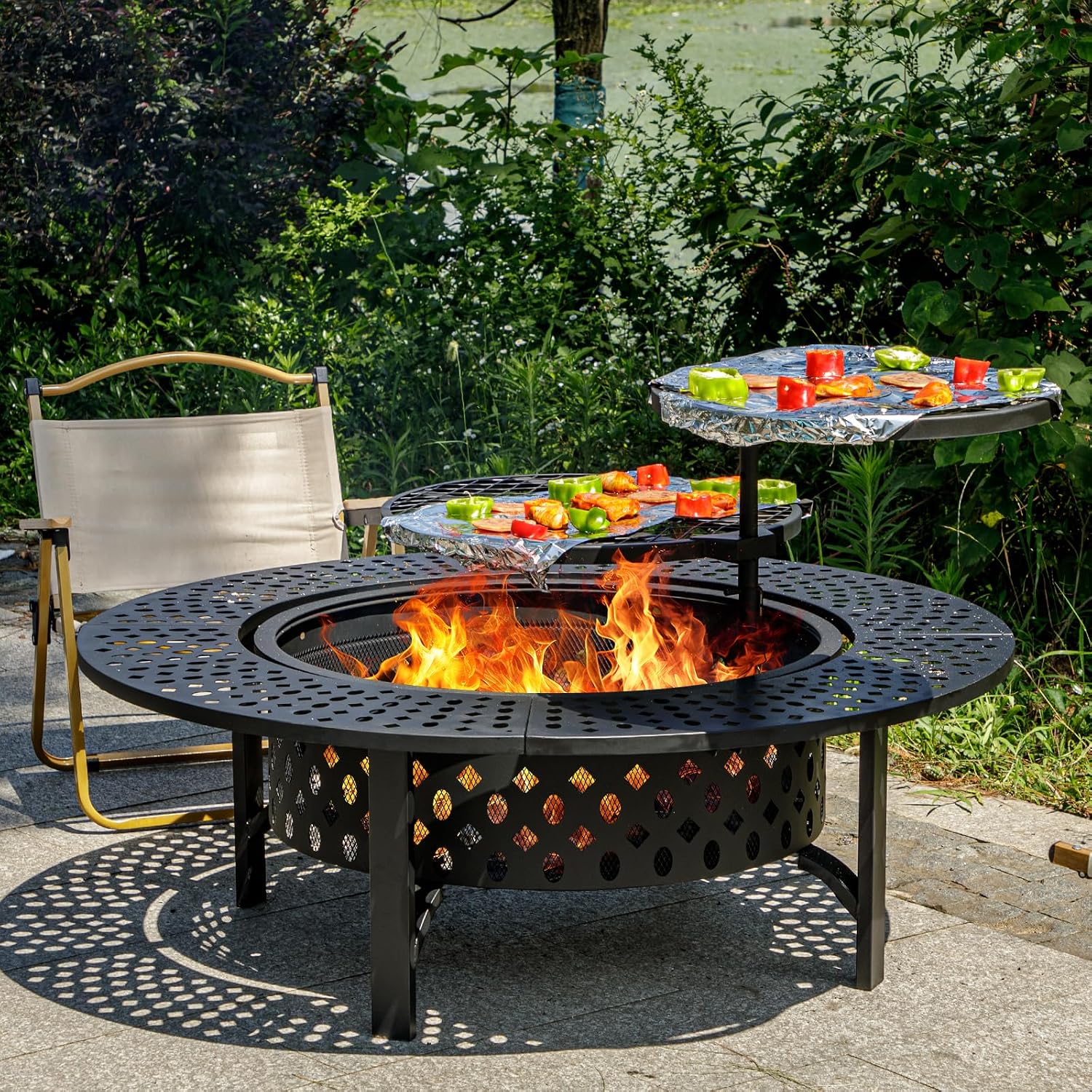
Best for Cooking and Big Groups: OutVue 47 Inch Fire Pit with 2 Grills
Forty-seven inches and two grills is a different category of object. This is the pit for people who feed a crowd and want dinner to come out of the same fire they sit around afterward. The width gives you a coal bed you can actually work with, hot on one side, cooler on the other, which is what you need if you are cooking anything thicker than a hot dog.
Two grills are more useful than they sound. You can cook at two heights, move food off direct heat when it is done, or hold a pan of something warm while the main event finishes. Anyone who has tried to cook a whole meal on one small grate over a bowl fire knows the problem this solves.
The cost of the size is space and fuel. Forty-seven inches wants a real patio or a wide gravel pad, and it burns more wood per evening than a 27-inch bowl. It also is not the pit you move by yourself once it is set. If that sounds like a permanent installation, that is because it is one.
How I judge a fire pit
Four things, in order, every time.
Steel gauge. Thickness decides lifespan. Heavy steel holds heat, resists warping, and shrugs off weather. Thin steel is a one-season novelty dressed up as a fire pit. Ask the question before you look at the photo.
Smoke behavior. Secondary burn is the fix, and it is worth paying for if you plan to sit downwind. A single-wall bowl will always smoke the honest way, which is fine as long as you know that going in and build accordingly.
The spark screen. This is not optional. I have seen what an ember does to a deck, and it is a repair bill measured in thousands. If a pit does not come with a screen or a lid, buy one. If it cannot take one, keep looking.
Permanence or portability. Decide which one you are before you buy. A portable propane unit and a 47-inch cooking pit solve opposite problems, and buying the wrong one is why so many fire pits end up under a tarp.
The fire pit reference table
| Fire pit | Fuel and design | Footprint | Best for | What to check | Price |
|---|---|---|---|---|---|
 Visit on Amazon → Breeo X Series 24 |
Wood, smokeless secondary burn | 27.5 in, corten steel | Permanent backyard installs, family nights | Whether a screen or lid is included | $599.00 |
 Visit on Amazon → KOL 27.5 Inch Round Fire Pit |
Wood, single-wall bowl | 27.5 in, oxidized steel | First pit, camping, small yards | Steel gauge and a cover | $119.99 |
 Visit on Amazon → Ignik FireCan |
Propane, hose and regulator included | Portable, canister style | Decks, campsites, no-smoke evenings | Tank size you plan to run | $199.95 |
 Visit on Amazon → OutVue 47 Inch Fire Pit with 2 Grills |
Wood, cooking grates | 47 in | Cooking, big gatherings | Patio space and wood supply | $179.99 |
What the four pits tell you
These four map onto four different buyers, and that is the useful part.
If you want the fire itself, the crackle and the smell and the work, the KOL bowl gives you that for the least money and asks for a cover in return. If you want the fire without the smoke in your hair, the Breeo X Series 24 is the one that solves the actual problem, and corten steel means it solves it for years rather than seasons. If you want flame without any of the work, the Ignik FireCan turns a propane tank into an evening, and it travels. If the fire is mostly about dinner, the OutVue 47 is the only one here built to cook on at scale.
Notice that none of these is a decoration. The pits I see fail are the ones that were bought for how they look on a patio in a photo: thin steel, no screen, no plan for weather. Every one of these four can survive a real season if you cover it and use a screen.
One last thing on placement. Put any wood-burning pit on gravel, stone, or a proper pad, never directly on a wood deck, and keep it well clear of railings and low branches. That is not a product problem, it is a layout problem, and it is the one I fix most often for clients after the fact.
Should you buy the Breeo X Series 24?
If you want one fire pit that stays in the yard and looks better in year five than it did on delivery day, yes. Corten steel forms a stable patina instead of flaking apart, the smokeless design burns the smoke above the fuel bed so it does not drift into your face, and 27.5 inches is a family-sized footprint. It is the premium pick in this group and the price reflects the material, not a logo. Sit downwind once and you will understand what you paid for.
Should you buy the KOL 27.5 Inch Round Fire Pit?
Yes, if you want a real wood fire without a premium budget. It is a classic free-standing bowl with an oxidized finish, which means the patina has already started and you are not going to baby it. It smokes the honest way a single-wall bowl smokes, so build small fires, feed them often, and buy a cover the same day. Do that and it earns its place on the patio.
Should you buy the Ignik FireCan Portable Propane Fire Pit?
Yes, if you want flame in seconds with no ash, no smoke, and no burn bans to argue with. The included hose and regulator let you run it off a standard tank instead of a shelf of tiny bottles, which is what makes it a tool rather than a novelty. You are buying convenience, not a campfire, and the heat is directional. Know that going in and it will not disappoint you.
Should you buy the OutVue 47 Inch Fire Pit with 2 Grills?
Yes, if you cook over fire and feed a crowd. Forty-seven inches gives you a coal bed big enough to actually work with, and the two grills let you cook at two heights or hold food warm while the rest finishes. It wants space, fuel, and a permanent spot, and it is heavy enough that you will not move it on a whim. If that describes your backyard, it is the most useful pit here.