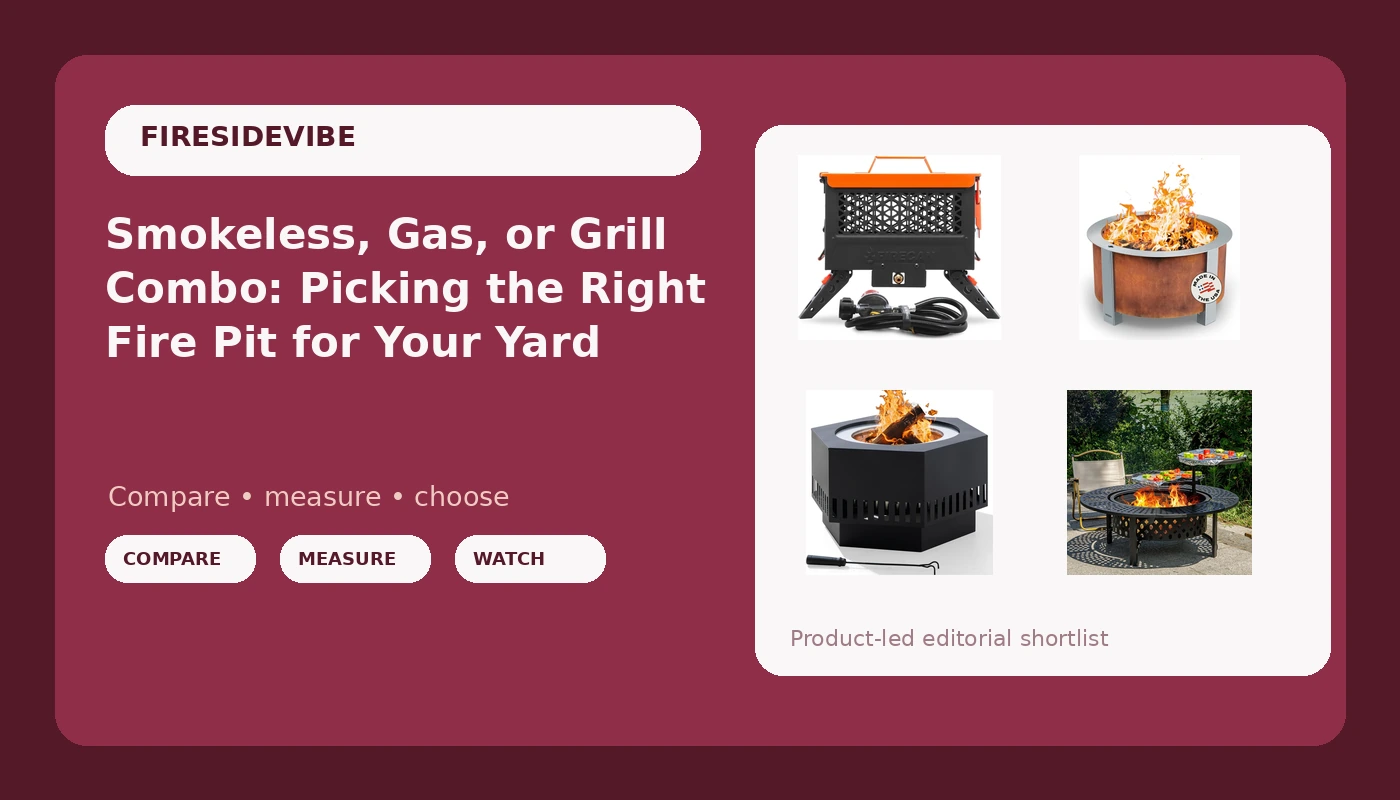
A fire pit is an easy purchase to get wrong, because what you are actually buying is not a bowl of fire. It is a seating arrangement, a smoke pattern, and a piece of steel that has to survive weather. Settle the fuel question first, wood or propane, and the shopping gets simple. The four options below cover the realistic range: a Corten steel smokeless fire pit built to stay in one spot, a stainless steel wood burner with a removable ash pan, a portable propane unit with a hose and regulator, and a wide pit with two grills for people who cook over the flames as often as they sit beside them. Smoke management, steel thickness, and portability decide the rest.
Related: How to Break In a New Fire Pit Without Smoking Out Your Yard →
Quick answer
Match the pit to the fuel and the footprint before you match it to a price. If wood is the point and the pit will stay in one place, look for a smokeless design with real steel and a cover. If you want flames without wood smoke, hauling, or ash, propane is the honest answer. If cooking matters as much as sitting, a wide pit with grills earns its space. None of that replaces the basics: check the steel thickness, check how the airflow is designed, and check what actually comes in the box, whether that is a spark screen, a cover, an ash pan, or a regulator.
Four useful options
| Model | Best fit | What stands out |
|---|---|---|
| Breeo X Series 24 - Corten Steel Smokeless Fire Pit for Outside - 27.5 in | Permanent backyard builds where wood is the point | Corten steel construction and a 27.5-inch smokeless design |
| SUNJOY Smokeless Fire Pit 28-Inch Hexagonal Firepit for Outdoor, Stainless Steel Wood Burning Fireplace with Removable Ash Pan, PVC Cover and Fire Poker, Ideal for Camping, Bonfire, Backyard, Black | Wood fires with easier cleanup | Stainless steel body, removable ash pan, cover and poker included |
| Ignik FireCan Portable Propane Fire Pit with Hose and Regulator | Camping, patios, and places where wood is not an option | Propane fuel with hose and regulator included, portable format |
| OutVue 47 Inch Fire Pit with 2 Grills | Sitting and cooking in the same footprint | 47-inch size with two grills |
Permanent backyard pick: Breeo X Series 24 - Corten Steel Smokeless Fire Pit for Outside - 27.5 in
Corten steel is a weathering steel, meaning the surface rusts into a stable layer instead of flaking away, which is why these pits are usually left uncovered and allowed to patina. That look is a decision, not a defect, and it is the opposite of the shiny stainless finish some people expect. The trade-off is weight and permanence: this is not a pit you move for a camping trip or shift around the patio depending on wind direction. If you want one fire pit for the next several seasons and you are willing to leave it in place, this is the category where that money goes.
Wood with easier cleanup: SUNJOY Smokeless Fire Pit 28-Inch Hexagonal Firepit for Outdoor, Stainless Steel Wood Burning Fireplace with Removable Ash Pan, PVC Cover and Fire Poker, Ideal for Camping, Bonfire, Backyard, Black
The removable ash pan is the feature people underrate until they have scooped ash out of a bowl with a shovel for a season. The cover matters just as much, because stainless steel resists rust better than painted mild steel but it is not immune to standing water and leaf litter sitting on it through a wet winter. The poker and cover being in the box means fewer separate purchases. The trade-off is that a stainless wood burner will not patina into that dark weathered look, and it will show soot and heat discoloration instead. If you want a wood fire without the full permanent-installation commitment, this is the middle ground.
Portable propane pick: Ignik FireCan Portable Propane Fire Pit with Hose and Regulator
Propane is convenience, and it is worth being clear-eyed about that. You get a fire that starts with a valve, produces no wood smoke, leaves no ash, and can be used when burn bans or apartment rules shut down wood burning. You give up the smell, the crackle, and the slow build of a real wood fire, and you take on a fuel supply that has to be refilled. The hose and regulator in the box matter because those are the parts that are annoying to source separately, and the portable format means this one can go from patio to campsite. If smoke in your hair or a wood supply chain is the problem you are solving, this solves it.
Fire and grill combo: OutVue 47 Inch Fire Pit with 2 Grills
A 47-inch pit is a different animal from a 27-inch one. It throws a wider, lower fire that more people can sit around, and the two grills let you move food on and off without dragging a separate grill into the yard. The trade-off is space and fuel: a wider pit burns more wood per evening, needs more clearance from anything flammable, and takes up patio real estate that a smaller bowl would leave open. If your fire nights involve food and a crowd, this is the shape that makes sense. If they involve two chairs and quiet, it is more pit than you need.
Prices and availability may change. Product images, names, and retailer links are matched to verified listings. No current price, rating, stock status, or measured result is stated here without current evidence.
What a smokeless fire pit actually does
A fire produces smoke when the wood is not burning completely. The volatile gases and particles rise before they can combust, cool off, and turn into the visible plume that follows you around the circle. A smokeless design attacks that with a second chance at combustion. In a typical double-wall pit, outside air is drawn into a channel between the inner and outer wall, heated by the fire, and released through a ring of holes near the top rim. That hot oxygen meets the rising smoke and burns a large share of it above the fuel bed. That is secondary burn, and it is the entire mechanism behind the word smokeless.
Two things are worth knowing before you buy into the label. First, smokeless describes a design intent, not a guarantee for every night. A cold start, wet or green wood, and a stiff crosswind will all put visible smoke back into the air. Seasoned, dry wood is not optional if you want the design to work the way it was drawn. Second, the burn is hotter and more complete, which means less creosote and less ash, but it also means the pit runs through fuel faster. A smokeless pit is not a magic box. It is a better airflow path, and airflow is something you can evaluate before you spend anything.
Steel gauge, fuel, and footprint
Steel thickness is the number that decides how long a pit lasts, and it is the number sellers mention least. Very thin steel heats fast, warps, and rusts through in a season or two, which turns a fire pit into a decoration that holds a fire once. Heavier steel holds its shape through heat cycling and weather. Corten weathering steel, used in the Breeo above, is designed to oxidize into a protective surface layer rather than rust away, which is why it is common in permanent outdoor installations. Stainless steel resists corrosion but varies in thickness, and thin stainless can still discolor and deform under sustained heat. If a listing will not tell you the gauge, treat that as information.
Fuel is the second decision, and it is really a lifestyle question. Wood gives you the full experience: the smell, the crackle, the tending, the ash. Propane gives you a switch. Neither is wrong, but mixing them up is how people end up with a gas pit they never light or a wood pit they resent hauling for. Footprint is the third. A 27-inch pit suits two to four people; a 47-inch pit suits a crowd but demands more clearance and more wood. Measure the seating area and the distance to railings, low branches, and siding before you commit to a size.
- Decide the fuel first. Wood, propane, or a grill-topped wood pit, based on how you actually spend your evenings.
- Decide whether the pit moves. If it travels, propane or a lighter wood pit wins. If it stays, weight is a feature.
- Check the steel. Ask about gauge or material before anything else, and be skeptical of a listing that will not say.
- Check what is included. Ash pan, cover, poker, spark screen, hose, and regulator are all real costs if they are missing.
- Measure the space. Diameter plus clearance plus seating distance is the real footprint, not the spec sheet number.
Setup and safety notes that apply to all four
- Keep the pit clear of low branches, deck railings, dry grass, and anything that can catch a drifting ember.
- Use a spark screen on wood pits. Embers travel farther than people expect, and a screen is cheaper than deck repair.
- Burn seasoned, dry wood. Wet wood smokes, pops, and defeats the secondary burn you paid for.
- Empty ash only after it is fully cold, and use the removable pan if the pit has one rather than digging around inside the bowl.
- Cover or store the pit through wet months, and check propane hose and regulator connections for leaks before the first light of the season.
- Never run a propane fire pit indoors, in a tent, or under a low roof, and keep the tank upright.
Which option should you choose?
Choose the Breeo X Series 24 - Corten Steel Smokeless Fire Pit for Outside - 27.5 in when the pit will live in one spot, wood is the point of the evening, and you want a steel body that is meant to weather in place. Choose the SUNJOY Smokeless Fire Pit 28-Inch Hexagonal Firepit for Outdoor, Stainless Steel Wood Burning Fireplace with Removable Ash Pan, PVC Cover and Fire Poker, Ideal for Camping, Bonfire, Backyard, Black when you want a wood fire with less cleanup and you would rather have the cover, poker, and ash pan in the box from day one. Choose the Ignik FireCan Portable Propane Fire Pit with Hose and Regulator when smoke, wood storage, or burn restrictions are the problem, or when the pit needs to travel. Choose the OutVue 47 Inch Fire Pit with 2 Grills when cooking and a larger seating circle are the priorities and you have the space and clearance to support them.
Every one of these is a design and material choice described from the listing, not a measured result from a burn night in your yard. Steel thickness, wood moisture, wind, and how you load the fire will change what you see far more than the marketing copy will. Treat the specifications as the starting point and your own first few fires as the real test.
The bottom line
The fire pit that works is the one that matches your fuel, your space, and your patience for tending a fire. A permanent Corten smokeless pit rewards someone who wants one good fire circle for years. A stainless wood burner with an ash pan and cover rewards someone who wants wood fires without the accessories shopping. A portable propane pit rewards anyone whose real goal is flames without smoke, ash, or a woodpile. And a wide pit with grills rewards the household where the fire is also the kitchen. Get the steel right, get the airflow right, and the rest is just evenings.