Most people shop for a fire pit backwards. They start with the shape, then the color, then the price, and only after it is sitting in the yard do they find out whether the smoke follows them around or whether the steel is still solid in year two. A wood burning fire pit is a combustion appliance, not a planter, and the parts that decide whether you love it or resent it are the ones you cannot see in a product photo: how air moves through it, how thick the metal is, and how far it sits from anything that can catch. This guide covers four products, two of them actual fire pits and two that solve the problems around one, then walks through the decisions that matter more than the model name.
Related: Fire Pit Placement: Clearances, Surfaces, and Safety →
Quick answer
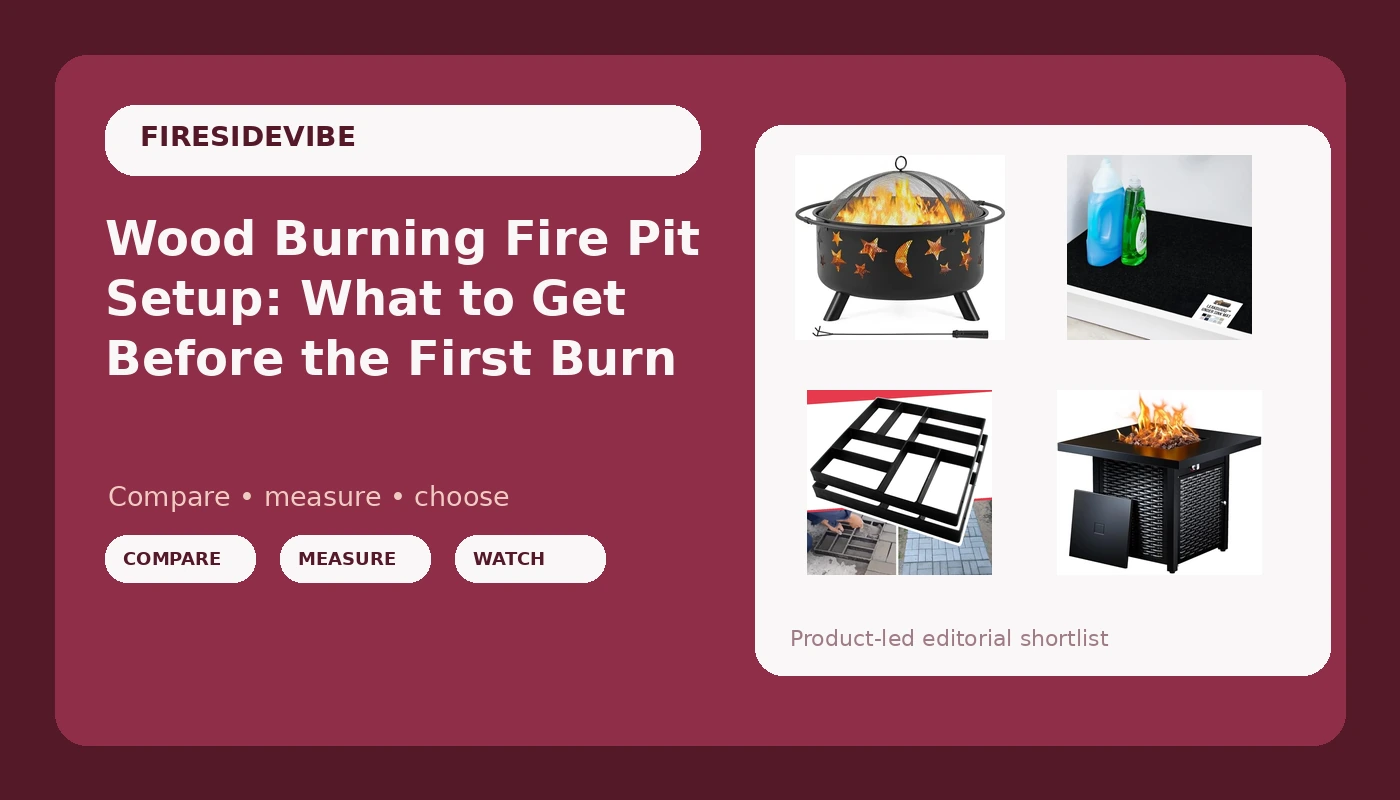
Decide on fuel before you decide on anything else. If you want a real fire with real logs, buy a wood burner and accept the smoke, the ash, and the tending that comes with it. If you want heat on demand and no smoke in your hair, buy a propane table and accept that you are buying convenience rather than a campfire. In this set, the Yaheetech 30in is the wood-burning option, the Ciays 28 inch table is the propane option with a CSA listing, a 50,000 BTU burner, and a lid and lava rock in the box, and the remaining two items handle the perimeter: a mat for the shelf where fire supplies live, and reusable molds for casting a path out to the seating area.
Four useful options
| Model | Best fit | What stands out |
|---|---|---|
| Yaheetech 30in Fire Pits for Outside Wood Burning Outdoor Fireplace | Backyards that want an actual log fire | 30-inch wood-burning outdoor fireplace |
| Ciays 28 Inch Propane Fire Pit CSA-Listed Outdoor Fire Pit Table | Instant heat with no ash or smoke | CSA-listed 50,000 BTU steel table, lid and lava rock included |
| GORILLA GRIP LeakGuard Under Sink Mat for Kitchen Cabinet, 24x24 Black | Keeping the shelf where fire gear is stored clean | 24x24 mat with a LeakGuard rim, black finish |
| Anothera 2Pack Walk Path Maker Reused Concrete Molds | Building a defined walkway out to the fire area | Two reusable 8-grid concrete molds, 15.7 by 15.7 inches each |
The wood-burning option: Yaheetech 30in Fire Pits for Outside Wood Burning Outdoor Fireplace
The trade-off with any wood burner is the one nobody puts on the box: smoke. A single-wall pit burns hot in the middle and pushes smoke outward at head height, which is fine when the wind is steady and miserable when it is not. That is a design reality, not a defect, and it is why placement matters as much as the model. Wood also means you supply the rest of the kit yourself: a spark screen if one is not included, a metal ash container, a poker, and dry fuel. Check the current listing for exactly what ships in the box, because that varies by seller and by season. What you get in exchange is the thing a gas table cannot fake, which is a fire you have to tend, and the fact that a 30-inch bowl is a comfortable size for a small seating circle without dominating a modest patio.
The propane option: Ciays 28 Inch Propane Fire Pit CSA-Listed Outdoor Fire Pit Table
A CSA listing means the unit has been tested against a recognized safety standard, which is the first thing I look for on anything that burns gas. After that, 50,000 BTU is a serious number for a 28-inch table, and serious heat means serious clearance: give it room, keep it off wood decking unless the deck is protected underneath, and never run it indoors, in a garage, or under a closed roof. The lid is the underrated part of this design, because it turns the table into patio furniture when the burner is off. The lava rock spreads the flame and hides the burner ring. What you give up is the smell, the crackle, and the ritual. Propane is a convenience purchase, and pretending otherwise leads to disappointment. Plan on a tank, a cover, and a place to store both.
The shelf extra: GORILLA GRIP LeakGuard Under Sink Mat for Kitchen Cabinet, 24x24 Black
This is not a fire pit accessory and it does not pretend to be one. It is here because the shelf where you keep the ash bucket, the kindling bag, the fire starters, and the gloves gets filthy, and ash dust stains bare shelving permanently. A mat with a raised rim catches the crumbs and the drips before they reach the wood. It is designed for under-sink cabinets, and it works the same way on a utility shelf or in a tote. Two honest limits: it is not heat rated, so it should never sit under a hot pit or be used as a hearth pad, and it is not a container, so do not treat it as one for anything flammable. It is a liner, and a liner is a small, cheap way to keep a storage area from becoming a mess.
The path extra: Anothera 2Pack Walk Path Maker Reused Concrete Molds
The path is part of the fire setup, even though nobody lists it that way. A defined walkway keeps guests from cutting across the lawn in the dark, keeps chair legs out of the mud, and keeps the traffic pattern away from the side of the pit where the smoke drifts. These molds cast a repeating 8-grid stone from bagged concrete mix. You need a level bed, a mixing tub, and patience for curing, and you need to follow the mix instructions rather than guessing at water. Two molds let you work in a rotation instead of waiting on a single cast. If your yard is already paved or graveled, skip this entirely. If it is grass that turns to soup in November, this is the cheapest hardscape upgrade in the whole setup.
Prices and availability may change. Product images, names, and retailer links must be matched by verified ASIN. Do not state a current price, rating, stock status, or measured result without current evidence.
Wood versus propane: what you are actually choosing
Wood is the experience. Gas is the convenience. Everything else is a detail. A wood fire gives you crackle, smell, radiant heat that warms your face while your back stays cold, and a reason to stay outside until the logs are ash. It also gives you smoke that moves with the wind, ash to dispose of, and a fire you have to feed. A propane table gives you a flame you can turn on and off in seconds, no ash, no smoke, and a surface you can put a drink on when the lid is closed. It also gives you a tank to refill, a fuel cost per evening, and a flame that looks like a fire without behaving like one. Neither is better. They are different products for different nights, and the honest move is to pick the one that matches how you actually host, not how you imagine you will.
Steel, smoke, and the details that decide year two
Steel thickness is the single best predictor of how long a pit lasts. Thin sheet metal heats, cools, and flexes every burn, and that cycle is what rusts a pit out from the inside in a season or two. Thicker steel holds heat, resists warping, and survives being left out in the rain, though no bare steel survives forever without a cover. Ask what gauge or thickness the bowl is before you buy, and if the listing does not say, treat that silence as information. Smoke behavior is the other long-term factor. A pit with no secondary airflow path pushes smoke outward at seated head height, and the fix is placement, not a new model: sit downwind, raise the pit slightly, and keep the seating circle tight enough that nobody is in the plume. Finally, a spark screen is not optional equipment. Embers travel farther than people expect, and a screen is the difference between a fire night and a deck repair.
- Decide fuel first: wood for the experience, propane for the convenience.
- Measure the space and the clearances before you buy anything, including overhead branches.
- Check what ships in the box: lid, spark screen, cover, lava rock, and tools.
- Match the bowl size to the seating circle, not to the photo on the listing.
- Plan the surface and the path before the pit arrives, not after the first muddy night.
Setting up the area around the pit
- Set the pit on a non-combustible surface such as pavers, gravel, or concrete, never directly on dry grass or an unprotected wood deck.
- Keep clear of structures, railings, low branches, and anything else that can catch an ember.
- Check local burn ordinances and seasonal burn bans before the first fire, and follow them even when the evening is perfect.
- Use a spark screen and keep a metal container for ash, since ash stays hot long after the flame is out.
- Keep water, a hose, or a bucket of sand within reach, and never leave a fire unattended.
- Sit downwind once before you commit to a seating layout, then arrange the chairs accordingly.
Which option should you choose?
Choose the Yaheetech 30in Fire Pits for Outside Wood Burning Outdoor Fireplace when you want a real log fire and you are willing to manage smoke, ash, and fuel. Choose the Ciays 28 Inch Propane Fire Pit CSA-Listed Outdoor Fire Pit Table when you want heat at the push of a button, no ash to haul, and a table that doubles as furniture with the lid on. Choose the GORILLA GRIP LeakGuard Under Sink Mat for Kitchen Cabinet, 24x24 Black when the shelf holding your fire supplies needs a liner that catches ash dust and drips. Choose the Anothera 2Pack Walk Path Maker Reused Concrete Molds when the route to the pit is grass or mud and you want a permanent path without hiring a paver crew.
A caveat worth repeating: this guide describes what each product is built to do, not a measured performance result, and no price, rating, or stock status is stated here because those change constantly. Verify current dimensions, included accessories, and safety documentation on the listing before you order.
The bottom line
Pick the fuel first and the model second, because that one decision determines almost everything about how you will use the pit. A wood burner like the Yaheetech 30in delivers the real fire and asks you to manage smoke and ash in return. A propane table like the Ciays 28 inch delivers instant heat, a CSA listing, and a lid that turns it into furniture, and it asks you to buy fuel and respect clearances in return. Then handle the perimeter: a rimmed mat keeps the storage shelf clean, and a pair of reusable molds turns a muddy shortcut into an actual walkway. Get those four things right and the fire pit stops being a purchase and starts being the reason people stay in the yard until the last log burns down.