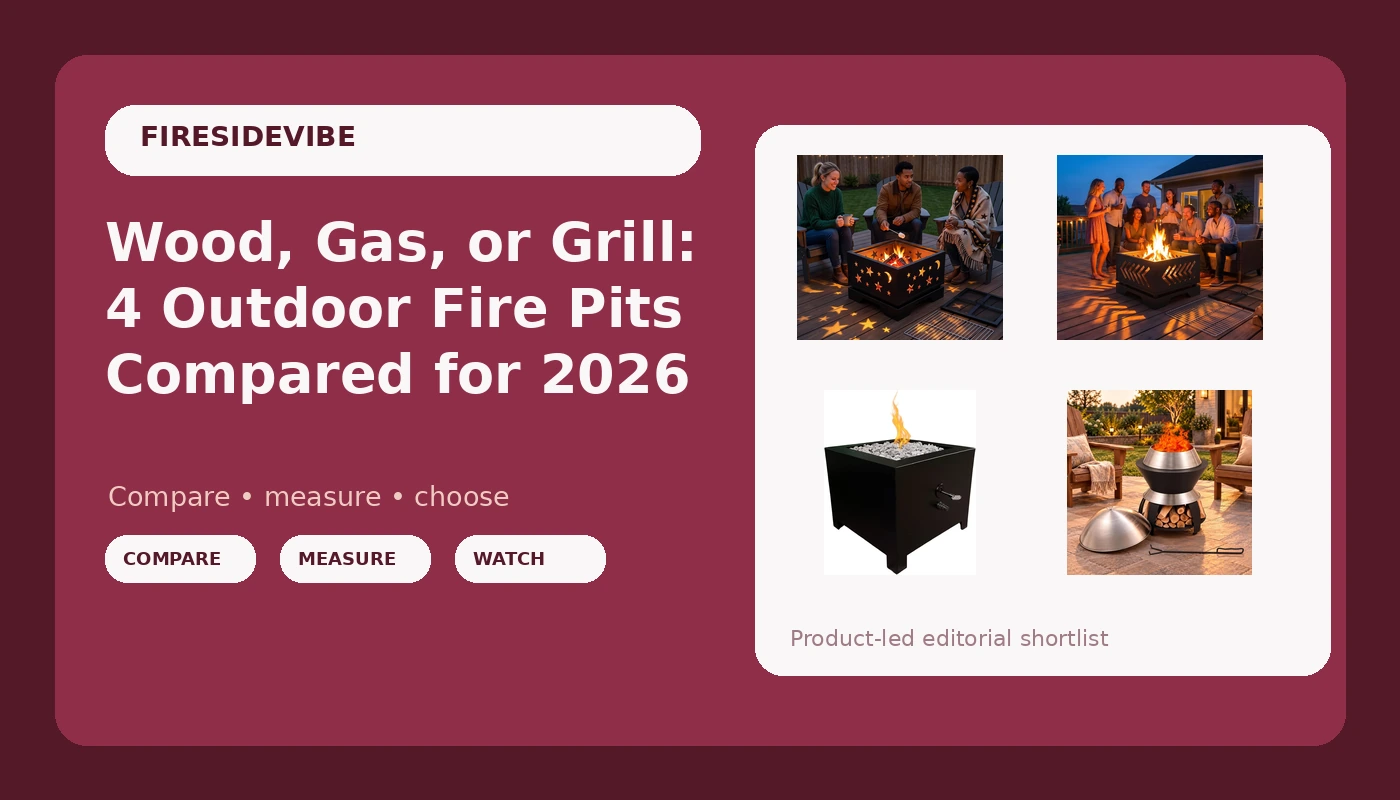
I have installed fire pits in Asheville backyards for fifteen years, and I have watched plenty of them fail. Not fail as in the logs burn down. Fail as in rusted through by the second spring, or smoked the party off the deck by nine o'clock. So when a client asks me to compare outdoor fire pits, I do not start with brands or star ratings. I start with the only question that matters: are you a wood person or a gas person?
The four pits in this comparison cover the whole spread of that question. Two are wood burners from Fire Beauty with 2-in-1 grilling setups. One is a 20 inch smokeless wood burner on a stand. One is a propane table with lava rocks, a black powder coated finish, and a key valve, sitting in a completely different price bracket from the other three. Fit is the whole point of this guide. A fire pit that suits your yard and your habits gets used forty nights a year. A fire pit that fights your yard gets covered with a tarp and forgotten by July.
For most backyards, the 20 inch smokeless wood burner is the best outdoor fire pit of this group, because it manages smoke and stays easy to place without a propane tank in the picture. If you cook over your fire, the two Fire Beauty 2-in-1 models change the math entirely. And if you want flame on a covered patio with no ash, no logs, and no smoke in your hair, the propane table is the only one of the four that gets you there.
The four fire pits side by side
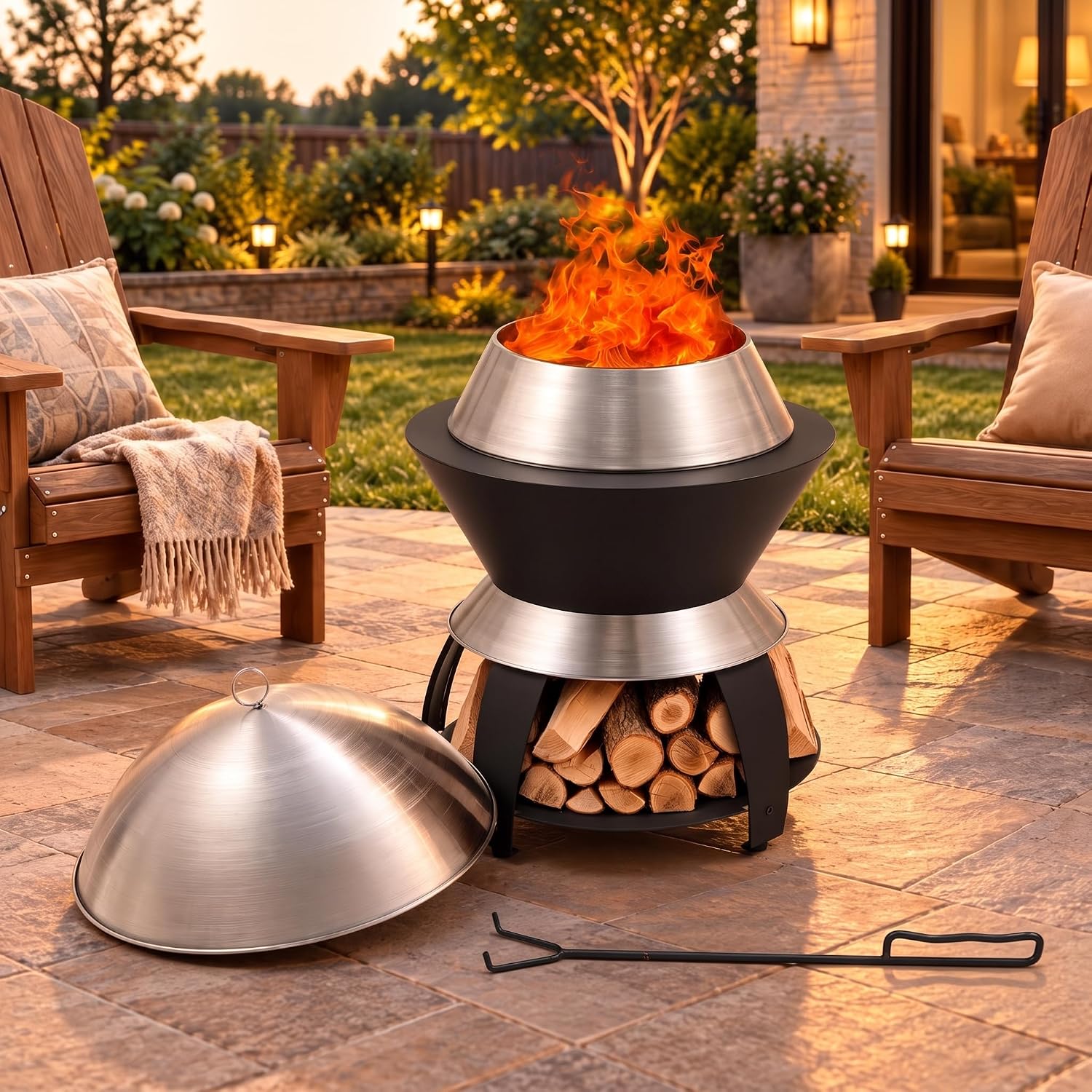
20 Inch Smokeless Fire Pit with Stand, Outdoor Wood Burning Fire Pit
Smokeless design keeps most of the smoke off the people sitting around it, and the included stand lifts the bowl off the deck or patio surface
Small firebox means ambiance more than radiant heat, and the stand footprint limits where it can sit
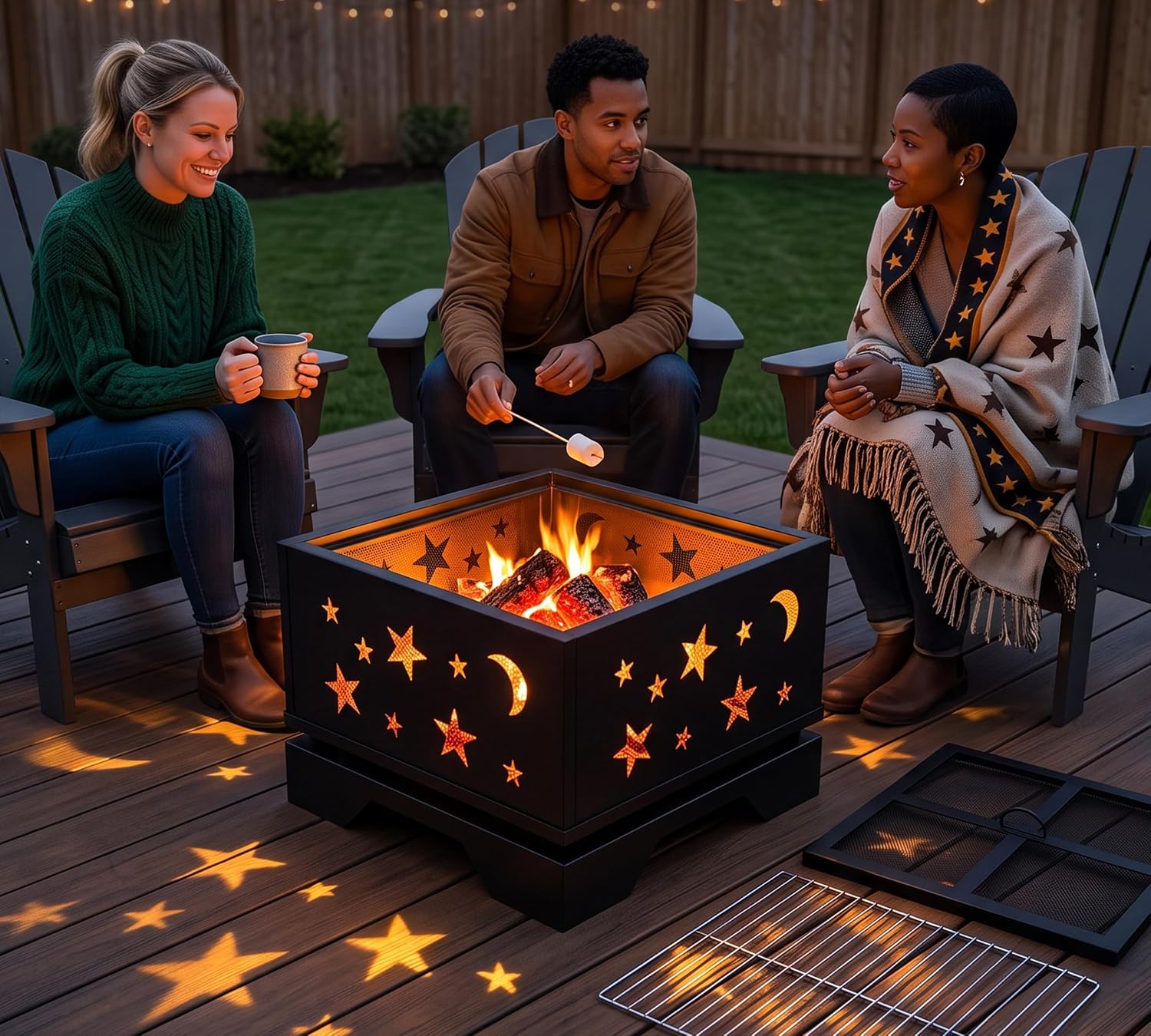
Fire Beauty Heavy Duty Square Cutout 2-in-1 Outdoor Fire Pit & Grill
Square cutout body with a grill function, so one unit handles heat and cooking
Heavier to move around, and a 2-in-1 always means managing two jobs at once
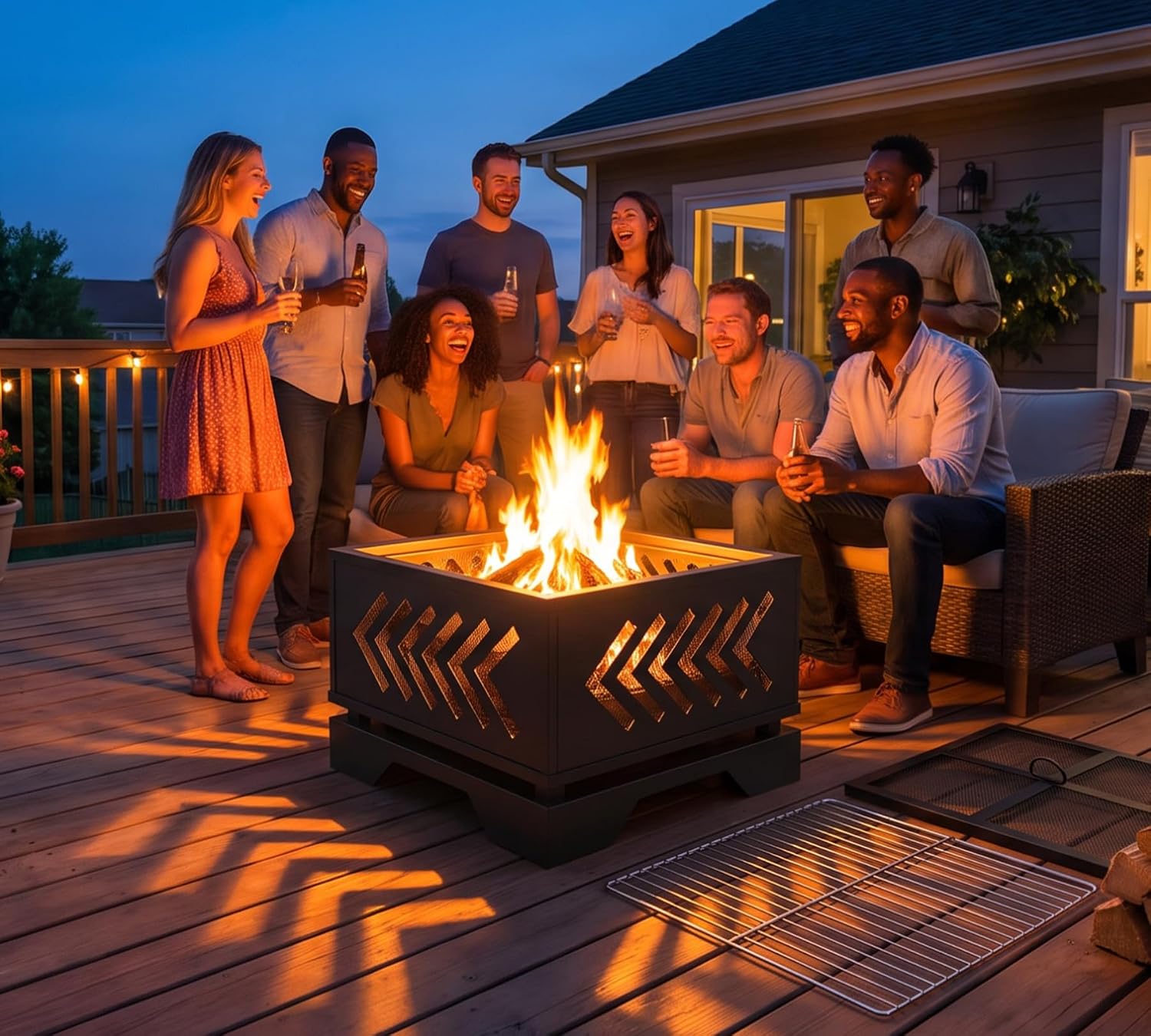
Fire Beauty Arrow Geometric Cutout 2-in-1 Outdoor Fire Pit Heating & BBQ
Same 2-in-1 heating and BBQ setup with a bolder arrow cutout face that throws light in patterns
Reads almost identically to the square version, so the decision comes down to looks
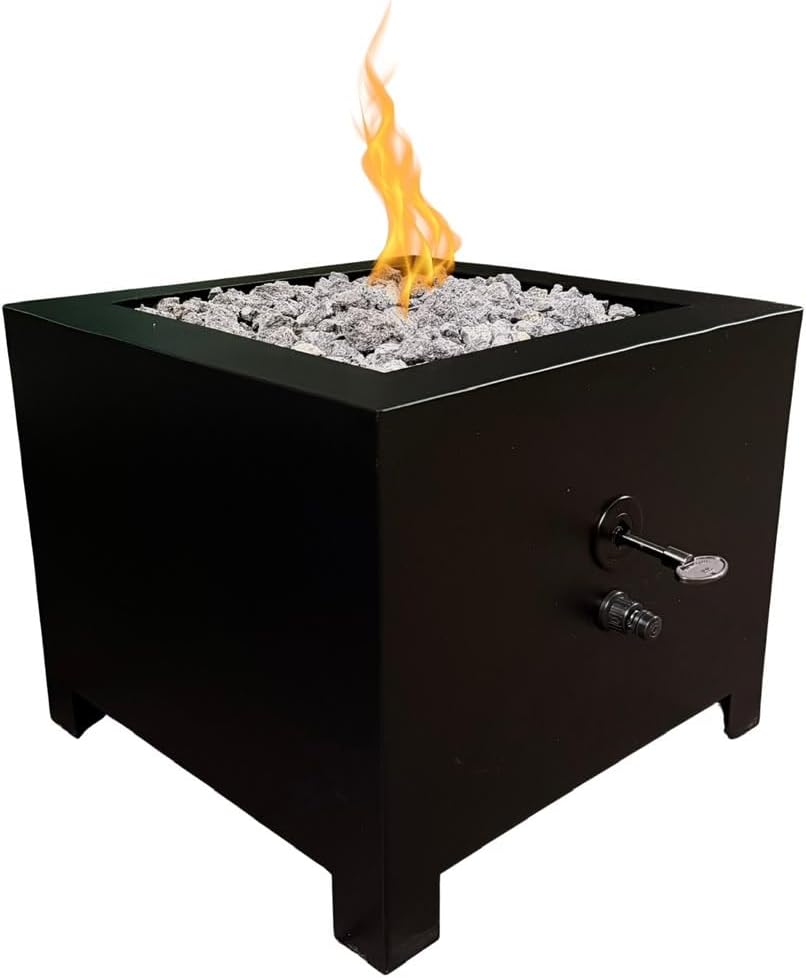
Luxery Indoor Outdoor Square Propane Fire Pit Table with Lava Rocks, Steel Gas Fire Pit, Modern Fire Bowl with Key, Black Finish (Powder Coated)
Propane convenience, lava rocks, powder coated black steel, and a key valve that makes lighting simple
The price bracket is in another league, and propane means you are not getting a campfire
Prices and availability were captured from Amazon Creators API and may change.
Wood or gas, decided before you shop
Three of these four pits burn wood. That is not an accident. Wood is the experience. Gas is the convenience. I have said that to clients for a decade and I will keep saying it, because people keep buying the wrong one.
Wood gives you crackle, smell, ash, and a fire you have to feed. You get heat that actually pushes back at a cold night, and you get the thing everyone actually wants, which is a reason to sit outside and stare at something for two hours. What you also get is smoke, unless the pit is built to burn it twice, and you get ash cleanup, and you get a fire that takes twenty minutes to become worth sitting next to.
Gas gives you a flame in about ten seconds, no ash, no smoke, and a shutoff valve. What it does not give you is a campfire. It is a fireplace flame, steady and blue at the base and orange above, and it will never pop or throw sparks or smell like anything. If your fire pit lives on a covered porch, a screened patio, or a balcony where open burning is not allowed, gas is not a compromise. It is the only option that works.
So decide that first. Everything else in this comparison is a detail.
The 20 inch smokeless pit: the one I would hand most people
Smokeless design is the feature that changed backyard fires in the last several years. The idea is secondary burn: the pit pulls air in through the lower vents, the fire heats that air, and the hot air gets pushed back into the top of the firebox where it ignites the smoke before it ever reaches your face. Double wall construction is how most of them do it. The result is not zero smoke. It is smoke that mostly goes up instead of following whoever moved their chair.
That matters more than any other spec, because a fire pit that smokes you out of your own yard is a seating problem, not a fire pit. I have watched a group of six people rearrange their chairs four times in one evening around a cheap bowl pit. Nobody does that around a smokeless one.
The trade-off is heat. Smokeless pits run small and they burn efficiently, which means less radiant heat coming off the side of the firebox. You warm your hands over the top, not your knees from three feet away. If you want a pit that heats a circle of chairs in November, a wide open wood bowl will beat it. If you want a fire for family nights in the shoulder seasons, this is the one that keeps everyone sitting still.
The stand is the other thing I like here. Lifting the bowl off the surface matters on a wood deck or a composite patio, and it also means you can pick the whole thing up and move it when you want the fire somewhere else. That portability is a real difference from the Fire Beauty units.
The Fire Beauty pair: square cutout vs arrow cutout
These two are the same idea executed twice. Both are 2-in-1 units, which means the fire pit also has a grill function. Both are described as heavy duty, and both have cutout panels in the side of the firebox, one in a square pattern and one in an arrow geometric pattern. When the fire is burning, those cutouts throw shapes onto the ground and up the side of whatever is behind the pit. It is a genuinely nice effect at night, and it is the main reason to pick one over the other.
Here is the honest comparison: the square cutout version and the arrow cutout version read almost identically on paper. Same 2-in-1 heating and BBQ setup. Same general footprint. If you are choosing between them, you are choosing a look, and you should just pick the one you would rather stare at. The square is calmer and reads more traditional. The arrow geometric is busier and throws more pattern. Neither is a better pit.
The 2-in-1 grill function is the part that deserves a warning. Cooking over a fire pit is a slower, dirtier process than cooking on a grill, and it always has been. You are waiting for coals, not adjusting a dial. You are working over a fire that is also your heat source, so you are leaning across flame to flip anything. And cleanup means dealing with a grate that has been sitting over burning wood all evening.
What you get in return is one unit that does two jobs, which matters if you have limited patio space or you do not want a grill and a fire pit competing for the same corner. The Fire Beauty units are heavier than the 20 inch smokeless pit, and that weight is the point. Heavier steel, more permanent placement, less chance the thing flips in a windstorm.
The propane table: buy it for the patio, not the campfire
The Luxery propane table is the outlier here, and not just because of the price. It is a square fire table with lava rocks over the burner, a black powder coated steel finish, and a key valve for lighting. It is listed for indoor and outdoor use, which is a distinction none of the wood pits can claim.
Lava rocks do a specific job. They sit over the burner and break up the flame so it spreads and looks like a fire instead of a row of jets, and they hold some heat so the table keeps radiating after you turn it down. It is a look, and it is a good look on a patio with furniture around it. A propane table reads as part of the landscape. A wood pit reads as a campsite, and I mean that as a compliment to both.
The key valve is the practical part. You turn a key, you get flame, you turn it back and you are done. No kindling, no newspaper, no twenty minute wait, no ash to shovel the next morning. For a client who hosts people and wants the fire to be ready when the guests walk out the door, that is worth more than any of the wood features above.
What you give up is the fire itself. Propane is not going to crackle or pop or smell like anything, and it is not going to throw the radiant heat a real wood fire does. You also inherit tank management, which means storing a propane tank and knowing how much is left before you invite people over. And a fire table like this wants a cover and a sheltered spot, because powder coated steel sitting out through a mountain winter is how finishes fail.
If you want ambiance without the smoke in your hair, this is the pick. If you want a fire, it is not.
What I check before I recommend any of these
Steel gauge decides lifespan. The thickness of the metal is the whole story on how long a pit survives, and it is the spec most listings bury or skip. Thin steel warps, then rusts, then becomes a decoration. A pit that rusts through in year one was never a purchase, it was a rental. If a listing does not tell you how thick the steel is, that silence is information.
The spark screen is not optional. I have seen what an ember does to a deck, and I have seen it more than once. Any wood burning pit in this comparison should be paired with a screen or a spark arrestor, and if the unit does not include one, buy one before the first burn. This is the single cheapest safety upgrade you can make.
Airflow is what separates a fire from a smolder. A wood pit needs air coming in low and heat going out high. If the vents are small or positioned badly, you get a smoky, sulky fire that never gets going, and you blame the wood. It is almost never the wood.
Footprint and surface matter more than people expect. Measure where the pit will live, add three feet of clear space in every direction, and check what is overhead. A stand based pit like the 20 inch smokeless model gives you flexibility that a heavier table does not, and a propane table wants to be somewhere you are not moving it again.
Weather is the last filter. Rain, snow, and a mountain winter will find every weakness in a finish. A cover is not a nice extra. It is part of the purchase price.
The trade-offs nobody puts in the listing
Every one of these four pits is a set of compromises, and the listings will not spell them out for you.
Radiant heat versus looks. Smokeless pits and propane tables both look great and both throw less side heat than a wide open wood bowl. If cold weather fires are the goal, know that going in.
Cooking versus sitting. The Fire Beauty 2-in-1 units are the only ones here built for grilling, and the grill function is exactly what makes them heavier and more involved to use. Convenience and capability pull in opposite directions.
Portability versus permanence. The 20 inch smokeless pit is the one you can move. The propane table is the one you place once and leave. Decide which of those you are before you buy, because you cannot have both.
Price bracket versus experience. The propane table sits in a completely different bracket from the three wood pits, and what you are buying at that level is convenience and a finished look, not more fire. Wood is still the experience. Gas is still the convenience.
Which one for which yard
For a family that wants a fire three nights a week and does not want to smell like it the next morning, the 20 inch smokeless wood burner is the answer. It is the easiest of the four to live with.
For a household that wants to grill over the fire and has one corner of the patio to work with, either Fire Beauty 2-in-1 gets it done. Pick the square cutout for a calmer look, the arrow geometric for something with more pattern.
For a covered patio, a screened porch, or anyone who wants flame on demand with no ash and no smoke, the propane table is the only one of the four that fits. Just budget for a cover and a spare tank.
What I am watching next
I keep testing smokeless designs against open wood bowls on the same cold nights, because the heat gap is the one thing that keeps surprising people. The other thing on my bench is fire pit covers, since the finish on any of these four lives or dies by whether you actually use one. That piece is coming, and it will be short and blunt.